Category: National

  • Protesters bang drum for Christian Dalits’ rights

    Protesters bang drum for Christian Dalits’ rights

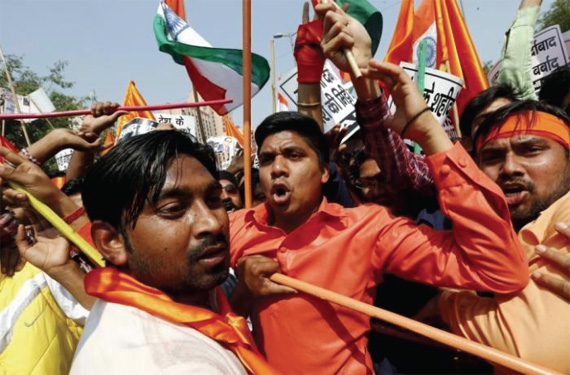
    Beating their drums, some 200 socially poor Dalit people marched through the streets of Indian capital New Delhi on Dec. 4 in a novel form of protest to demand that they be given social benefits denied to them because of their Christian faith.

    Participants in “the drum, dance, demonstration” played their drums near parliament to demand that the government withdraw a 1950 presidential order that said only Dalits of Hindu religion should be given social security benefits meant for Dalit people’s advancement.

    “Government comes and goes, and we get only false promises. Several protest rallies and marches in the past were useless. Now we play our drums to wake up the sleeping government,” said Father A. Arputharaj, a protest organizer from Pondicherry and Cuddalore Archdiocese in Tamil Nadu.

    The Indian constitution has special provisions to assist Dalit people’s educational and social advancement with financial aid and reserved seats in jobs and educational institutions.

  • India’s ‘nicest’ judge who brought compassion to judiciary

    India’s ‘nicest’ judge who brought compassion to judiciary

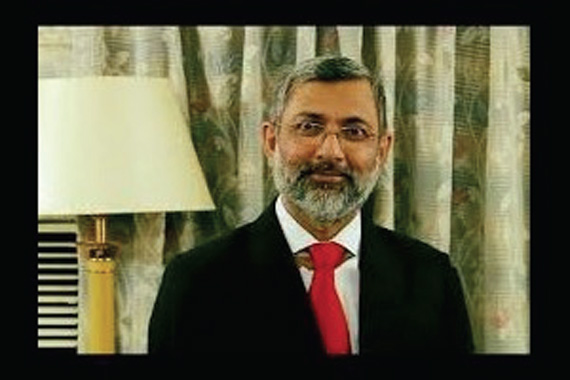
    Justice Joseph, the controversial but ‘compassionate’ judge who has retired from the India’s Supreme Court, was seen to have held views in line with the Church — particularly on abortion and divorce.

    “If someone is to take a vote on who is the nicest judge, Kurian Joseph will win,” Attorney General K.K. Venugopal said to a huge crowd gathered on the Supreme Court lawns to bid farewell to the judge on November 29.

    In his five-year-eight-month tenure as an apex court judge, Justice Joseph always had a trademark smile on his face even during the many the watershed moments for India’s judiciary. But the “compassionate judge” has never made any bones about taking on the government. From quashing the Narendra Modi government’s ambitious National Judicial Appointments Commission in 2015 to holding a press conference against then Chief Justice Dipak Misra in January 2018, Joseph has constantly been at the centre of controversy.

    However, his first ‘controversy’ happened in April 2015 when he wrote to Modi expressing his inability to attend a conference of judges and chief ministers that was held on Good Friday.

    “Secularism is being tinkered with,” Joseph had said objecting to holding official events on festivals of religious minorities. While Hindu radical websites attacked the judge, the church rallied behind him.

    “There are judges who have political affiliations to far-right organizations. So while it is unfair to single out Justice Joseph for his views, judges must certainly have a code of conduct governing their affiliations,” said senior advocate Colin Gonsalves.

    As a matter of principle, Joseph never delivered a death sentence in his 18-year career as a judge. The controversial 2015 ruling in which the top court awarded the death penalty to terror-convict Yakub Memon turned dramatic after a two-judge bench of Justices Joseph and Anil Dave delivered a split verdict.

    “There have been many judges who have taken a principled anti-death penalty stand. Some may have been influenced by their religious views but I don’t see anything wrong with that,” said senior advocate Sanjay Hegde.

    “Justice M.B. Shah, a Jain, was known as a judge who would never award the death penalty. Lawyers would deliberately try and get their cases listed before him,” he added.

    When one such case was before a bench headed by Joseph in July, he gave away what he thought of abortion in a single word — murder.

    “You should make the mother hear her child’s heartbeat,” Joseph said.

  • Protestant clergyman arrested and then released in Bihar for screening film about Jesus

    Protestant clergyman arrested and then released in Bihar for screening film about Jesus

    A Protestant pastor, Rev Sojan, was arrested last on December 8 in Bakhtiyarpur, a village in Patna District (Bihar), for screening Yeshu Masih (Jesus Christ), a film about the life of Jesus. “The Rev Sojan was just showing a movie,” Sajan K George, president of the Global Council of Indian Christians (GCIC), told Asia News. Unfortunately, “in this pre-election period, minorities are even more vulnerable and intimidated by the majority and its false accusations.”

    The incident shows that tensions between Hindu radicals and Christians are far from ending.

    Villagers tried to stop the clergyman from showing the film and wanted him out of the village the GCIC activist said. When he came back the next day he was accused of forced conversion, which led police to detain him for a few hours, before they took him back to his home village of Barh. Before they left, the agents told him not to return to Bakhtiyarpur.

    As is often the case in India, charges of forced conversion are made against Protestant and Catholic clergy to prevent them from doing their work.

  • Mizoram Church encourages more babies among members

    While the nation is grappling under population boom and the current generation opting for nuclear families and not more than 2 children, it is a known fact that many indigenous communities in India, in general and Northeast India in particular are facing the risk of dwindling population in terms of tribes. And Mizoram is one such State. Hence this news article should not come in as a surprise to many in Northeast Indian states.

    In what may be termed as a violation of the national policy of birth control, Synod (the highest council) of the Mizoram Presbyterian Church has decided to encourage more babies among its members. The Assam Tribune reported that in the on-going 95th assembly of the Synod at Electric Veng Presbyterian Church passed the agenda to encourage Mizo couples to have more babies to check the dwindling Mizo population. The resolution introduced by Tuirini Presbytery was unanimously passed after discussions.

  • World Day of the Poor: Jesus is in the wounds of tribals, says Card Gracias

    World Day of the Poor: Jesus is in the wounds of tribals, says Card Gracias

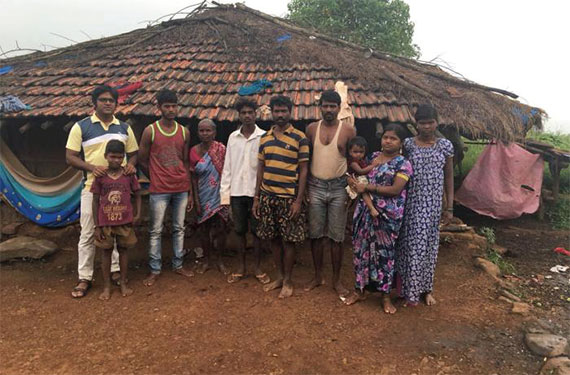
    “Every day we encounter Jesus in the flesh and in the wounds and bruises of our tribal and marginalised communities of the Raigad mission,” said Cardinal Oswald Gracias, archbishop of Mumbai and president of the Catholic Bishops’ Conference of India (CBCI). The prelate spoke on the second World Day of the Poor, titled ‘This poor man cried and the Lord heard him,’ an event Pope Francis established. In the Archdiocese of Bombay (Mumbai), “we meet the poor among our tribes of Raigad,” almost 200 km from the mega city, “not only with a festive lunch and a day of prayer, but also through a daily encounter to empower them.”

    According to Card Gracias, one of the greatest challenges of the modern Church is “the need to go to the margins of society and give hope to marginalised groups, raise a prophetic voice and engage in advocacy to bring about a new social order.”

    The Jankalyan Centre for Community Organisation (CCO) is situated in Mahad Taluka, Raigad District, about 180 km south-east of Mumbai in the foothills of Mahabaleshwar, the mission area of the Archdiocese of Bombay.  In Raigad district, the local tribal community represents 11 per cent of the total population.

    Fr Calistus Fernandes, director of the centre, said that although “the face of Raigad is undergoing a rapid change due to the setting up of numerous industries and globalisation,” a “large section of this tribal community still lives in dehumanising conditions.”

    In fact, the “Lack of basic amenities like health, water, shelter and education” as well as “malnutrition, illiteracy, superstition, exploitation (especially of women), unemployment, deforestation and other equally serious factors threaten the lifestyle and the very existence of these tribals.”

    The Jankalyan centre, like other 20 CCOs in the district, is committed to “serve the people, especially the marginalised and the oppressed, with a preferential option for the tribals.” Its goal is to promote an “abundance of life based on life values and communal harmony through fellowship.”

  • Make students ‘good,’ not smart: Justice Kurian Joseph

    Make students ‘good,’ not smart: Justice Kurian Joseph

    “Do not make students smart like corporate companies. Catholic schools in India should make them ‘Good,’ not smart,” Justice Joseph said.

    Good human beings are useful for societies’ upliftment as responsible citizens, he added.

    Justice Joseph was the chief quest and addressed at the All India Association of Montfort Schools (AIAMS), Montfort Technical Institute and Mont-fort Higher Secondary School, St Thomas Mount, Chennai on November 9.

    More than 115 principals and delegates from all over India attended the November 9-11 event that had the theme “Holistic Catholic Education in India.”

    Montfort Brothers of St Gabriel have 180 schools spread across the country.

  • Christian bodies told to tackle sexual harassment

    Christian bodies told to tackle sexual harassment

    Christian leaders and activists in India have made an impassioned plea to make their institutions free of sexual harassment and safer for children and women.

    Catholic and Protestant leaders made the call at a panel discussion on gender justice and women’s safety in Christian institutions in New Delhi. The discussion was part of the Nov. 17 silver jubilee programs of United Christian Action (UCA), an ecumenical forum of Indian Christians.

    “Sexual harassment and gender injustice are everywhere and the church institution is no exception. It has to be acknowledged first and then addressed accordingly before it is too late,” said Sister Tresa Paul, legal consultant at the Jesuit-run Indian Social Institute in New Delhi.

    In September 2017, the Catholic Bishops’ Conference of India issued a set of guidelines to deal with sexual harassment in the workplace, but church institutions have not followed it up, she said.

    The guidelines wanted every diocese to constitute an internal complaints committee “within six months, which did not happen,” the Holy Cross nun told the gathering of 200 invited leaders.

    Catholic Archbishop Anil Couto of Delhi and Protestant Bishop Waris Masih of the Church of North India’s Delhi Diocese were among the attendees. The prelates’ presence was a sign that church authorities are willing to listen to concerns of sexual abuse within Christian institutions, Sister Paul said.

    UCA chairwoman Esther Kar said the program discussed sexual violations and gender justice because “it is the most pressing issue in society,” especially against the backdrop of the ongoing #MeToo movement.

    The movement has gained momentum in India, with many women in the media, films and even the government claiming sexual harassment from prominent men in their workplaces.

  • Jalandhar priests question Bishop Mulakkal’s congregation

    Among the various controversies dogging Bishop Franco Mulakkal of Jalandhar is the formation of a new congregation by him – Franciscan Missionaries of Jesus (FMJ).

    Many priests in the northern Indian diocese have voiced concern over the congregation’s structure and speed of growth, besides the seemingly ‘luxurious’ life its members lead.

    Priests have not been forth-coming in discussing matters of the diocese since the rape charge surfaced against Bp Mulakkal, and later the mysterious death of a witness against him, Father Kuriakose Kattuthara, at Dasuya.

    The students of the new congregation are housed in a palatial building on a huge property that was bought for several millions of rupees at Malupota village on the Phagwara-Nawanshahr highway near Banga. It is an air-conditioned building that was earlier the Sanskar International School set up by a Delhi-based group.

    Currently, the seminary has some 80 students from Kerala. The seminary also plans to set up a regular school also on the premises.

  • Church denies involvement in Mizoram elections

    The Church in poll-bound Mizoram has clarified that it has no role to play in elections as it remains apolitical and doesn’t influence voting in any manner. In north-eastern states, particularly in the Christian majoritarian State of Mizoram, Churches are said to cast an influence on the voters and are considered as key centres that can make or break the fortune of any political party or candidate. Voters are said to be largely influenced by the view of the Church before going for voting. The Church, however, has clarified that it doesn’t interfere in any manner in the election process, adding that it is solely upon the people of the state to decide the fate of political parties through voting.

  • Church calendar stirs controversy

    Featuring the photo of Bishop Franco Mulakkal of Jalandhar on the official calendar of Trichur archdiocese for 2019 is seen as the prelate’s clout in his home State of Kerala.

    Bishop Mulakkal, who is accused of raping a 44-year-old member of the Missionaries of Jesus congregation under his authority, is now out on bail. The court has forbidden the prelate from entering Kerala except to appear before the investigating officer once in two weeks.

    The calendar, which is published by the Catholicasabha, the mouthpiece of the archdiocese, features pictures of all bishops hailing from the archdiocese. Bishop Mulakkal’s photo appears in his birth month of March.

    The move has not surprised those supporting the survivor since it is in line with the patronage the Church has extended to Bishop Mulakkal. It had allegedly tried to cover up the crime and shield the accused when the nun complained to the Church authorities.

    Political leaders are overwhelmed by the open support extended to the bishop by the Church and its various organizations. The Church continued the support even after the police found him prima facie guilty and arrested him.

    While bishops and priests made a beeline to the jail where he was lodged after the arrest, special prayers for the accused were organised in many churches across the state.