Category: From The States

  • Archbishop Emeritus Michael Augustine passes away

    Archbishop Emeritus S. Michael Augustine of Pondicherry-Cuddalore diocese of India passed away on November 4 at the age of 85. The funeral took place at the Immaculate Conception Cathedral in Pondicherry on Nov 6 at 10.00 a.m.

    He served for 39 years as a Bishop and 56 years as a priest. In the year 1974, Pope Paul VI appointed him the Rector of St. Peter’s Pontifical Seminary, Bangalore and was there till 1978 when he was consecrated the Auxiliary Bishop of Madras and Mylapore. He was appointed as bishop of Vellore on 10 July 1981 by Pope John Paul II. Pope John Paul II appointed the Metropolitan Arch-bishop of Pondicherry and Cuddalore on 25 June 1992.

  • Unification of churches stressed at Indian symposium

    Unification of churches stressed at Indian symposium

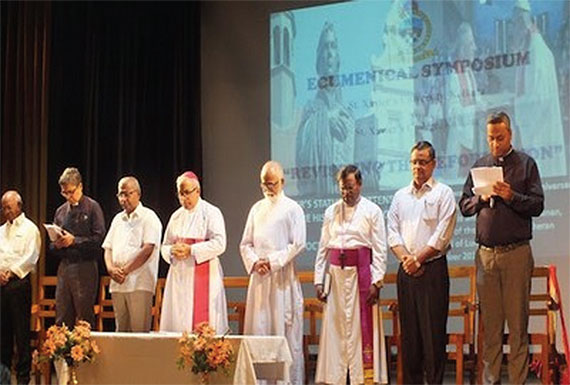
    Church leaders at an ecumenical symposium in Kolkata, have stressed the need for Christian unification as they studied Protestant Reformation, which challenged the 16th century Catholic Church to amend its ways.

    Father John Romus, former dean of the Morning Star College major seminary in Barrackpore highlighted how the Reformation helped the Catholic Church re-examine itself.

    Reverend Sunil Michael Caleb, Principal of Bishop’s College in Kol-kata, taking the Protestant perspective, said the Reformation was “a necessary tragedy.” It was necessary to protest against rampant corruption in the Church but the resulting split was a tragedy, he said.

  • Mumbai church among seven Indian sites awarded by UNESCO

    With seven out of 16 awards, India bagged the highest number of awards among all the participant nations in the United Nations Educational, Scientific and Cultural Organization (UNESCO) Asia Pacific Award for Cultural Heritage Conservation for 2017. While the award for merit was given to three Indian historical sites, the others four sites were given honourable mentions in the UNESCO awards, announced on November 1. Four of the awards winning structures are in Mumbai. The 16 winners of the UNESCO award are from six countries: Australia, China, India, Iran, New Zealand and Singapore.

  • Lay Catholic dedicates his life to Kashmir’s abandoned

    Inside a two-story building within the crowded Bakshi Nagar area of Jammu and Kash-mir state, 35-year-old Emma-nuel Appan is preparing break-fast for aged and abandoned charity home residents in his care. Wearing a T-shirt and with a rosary around his neck, the young Catholic layman hands out cups of tea. It has been more than a year since Appan volunteered to work at the Little Teresa Home for the elderly and destitute managed by a charity called “Friends of Birds of the Air.” This charity movement, began operating some 25 years ago in southern Kerala state and has since spread to most other states. The Little Teresa Home opened three years ago. It provides food, shelter and medical care as well as emotional support to residents, who are mostly aged between 70-80.

    “I choose this life for me and I am in love with it.” “God has made me a multi-tasked person,” he says light-heartedly. Fr Boby John of Jammu-Srina-gar Diocese, who heads the Little Teresa Home, praised the selfless efforts of volunteers such as Appan.

  • Indian bishops prefer tribal people over elephants

    Catholic bishops have joined indigenous people in Jharkhand to oppose a planned corridor for wild life as it threatens to displace thousands of people in 214 villages. The govt. has identified 296 hectares of land plans to build a “wild life corridor” for elephants over four districts in the state. Bp Vincent Barwa said the plan is difficult for people to understand “because on one hand the government claims to be acting to protect the forest and tribal people, but on the other it moves to displace them.” Bishop Barwa, said the pro-Hindu government has made to marginalize tribal people and take over their lands on behalf of industrial companies.

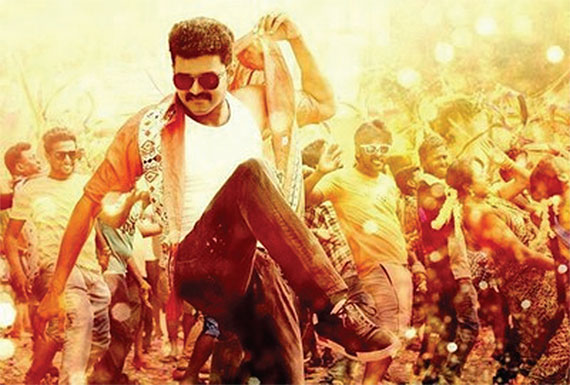
  • Vijay thanks supporters in Mersal row, uses Christian name

    Vijay thanks supporters in Mersal row, uses Christian name

    Tamil actor Vijay thanked his fans and supporters in the film industry for defending his film Mersal, which was criticised by BJP leaders. BJP accused that Vijay, “a practising Christian,” was running a “hatred campaign” against the Narendra Modi government.

    Vijay’s thank you message broke almost a week’s silence by the actor after the film was attacked. In his message, for the first time, the actor also used his full Christian name, C.Joseph Vijay.

    While the controversy first began over ‘Mersal’ discussing the Centre’s pet projects like Goods and Service Tax and Digital India, BJP national secretary H. Raja turned it into a communal issue citing Vijay’s religion.

    Raja shared a copy of the actor’s voter ID card showing his full name, Joseph Vijay, captioning it “Truth is bitter.”

    In a fitting reply to those who targeted his Christian roots, Vijay issued the thanks note on a letter pad with his name in red and bold, wrote “Jesus Saves.”

    Sources close to him said it was for the first time he introduced himself as C. Joseph Vijay before his fans.

    “He was always Vijay to everyone. Who bothers about the surname of an actor? He has rarely issued similar public statements for his fans as most such communications were video messages. I do not remember him using his official name in a public statement addressing fans. When politicians try to put him in bad light for having a Christian identity, this is a strong reply,” said a source.

    S A Chandrasekhar, Vijay’s father and noted Tamil director-producer, had earlier reacted to BJP’s accusations. Chandra-sekhar said that he left the columns of religion and caste vacant when he admitted his son to school.

    “Why is a national leader worrying about my son’s Christian surname? Why is that significant in the life of an artiste? What is the problem even if he is a practising Christian? We see cinema as a medium, but they see it as a weapon and get scared of dialogues,” he said.
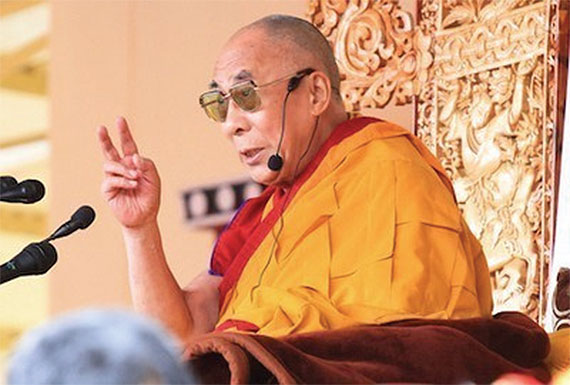
  • There are no Muslim or Christian terrorists: Dalai Lama

    There are no Muslim or Christian terrorists: Dalai Lama

    There are no Muslim or Christian terrorists because terrorists are no more religious once they embrace terror, Tibetan spiritual leader the Dalai Lama said. “People cease to be Muslim, Christian or any group the moment they became terrorists,” the Dalai Lama said at a public reception here on the second day of a three-day visit to Manipur.

    The Tibetan leader also said that he does not like the “America first” slogan of US President Donald Trump.

    A strong votary of non-violence, the Nobel Prize winner said violence does not solve any problem.

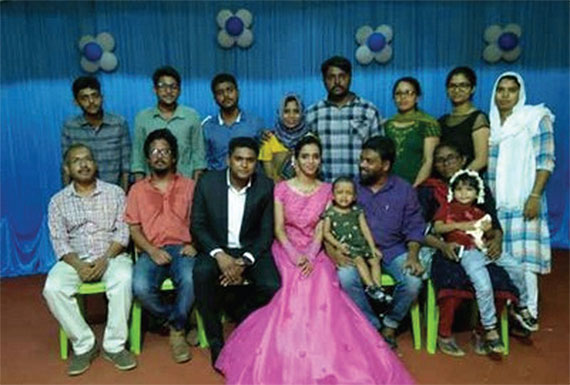
  • Mosque asks to boycott family for daughter marrying Christian

    Mosque asks to boycott family for daughter marrying Christian

    The committee of a mosque in Malappuram district in Kerala allegedly issued a circular urging the Muslims in that locality to boycott a family for allowing their daughter to marry a Christian man.
    Police is looking into the possibility of filing a case against the mosque committee, an official said.

    The incident came to light after a copy of the circular was reportedly posted by the woman’s uncle on social media on October 23, criticising the action of the mosque’s committee.

    “We have received a complaint from a lawyer through an e-mail. It is being explored for any chance of registering a case in the matter,” Superintendent of Police, Malappuram, Debesh Kumar Behara told PTI.

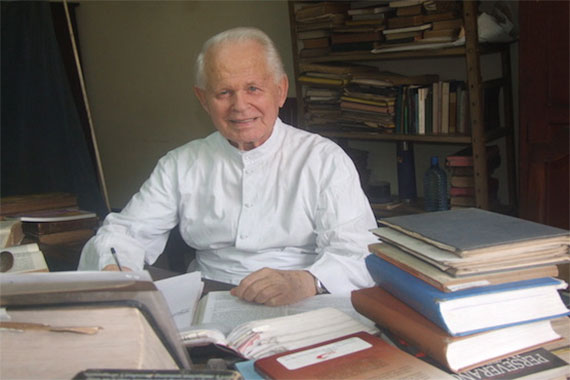
  • Belgian Jesuit translator of the Bengali Bible dies

    Belgian Jesuit translator of the Bengali Bible dies

    Jesuit Father Christian Mignon, a Belgian missio-nary who translated the Bible into the local language for people in the Indian state of West Bengal has died. He was 93.

    Father Mignon translated the Bengali Catholic Bible, popularly known as the “Mangalbarta (Good News) Bible.”

    The Bible is commonly read by the Bengali Catholic people today both in West Bengal and neighbouring Bangladesh which uses the same language. Father Mignon’s translation of the Bible is also used in the local Catholic Church’s liturgy.

    Father Christian Mignon, came to the Bengal mission at the age of 25. He was to make a unique contribution to religious life in Bengal, translating the Bible into Bengali over a 40-year period. The task, in which he was helped by Hindu poet and teacher, Sajal Banerjea, was comple-ted in 2003.

    He had previously translated liturgical texts after the Second Vatican Council, which opened the way to the use of local languages in the Mass.

    Earlier, Father Mignon, told ucanews.com that when the Second Vatican Council had taken a momentous decision to replace Latin with local languages for liturgy, the then Jesuit provincial had told him to start at once, and he got down to the job of becoming a Bible translator.

    Born in Belgium, Father Mignon entered the Society of Jesus in 1942. Wanting to commit his life to work as a missionary, he arrived in India in 1949 where he spent his initial years teaching at St Xavier’s Collegiate School, Calcutta (now Kolkata).

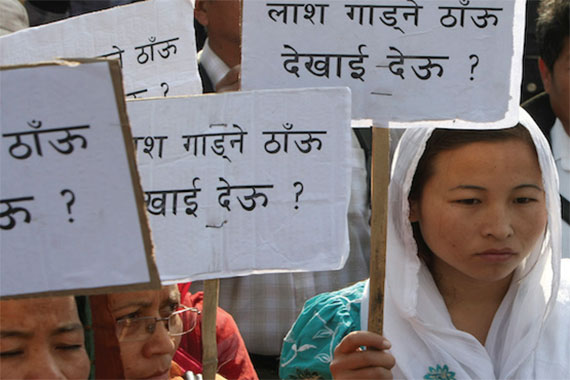
  • Nepal enacts law criminalizing religious conversions

    Nepal enacts law criminalizing religious conversions

    Nepal has enacted a law criminalizing religious con-version, joining neighbours India and Pakistan in a regional block in which the small Chri-stian minority faces increasing government threats to their faith and beliefs.

    The “Nepali government [has] taken a regressive step as this law severely restricts our freedom of expression and our freedom of religion or belief,” said Tanka Subedi, chairman of Nepals Religious Liberty Forum.

    The bill was signed into law by President Bidhya Devi Bhandari and enshrines addi-tional constitutional protection for Hinduism, which 80 percent of the population follows, the Christianity Today website reported.

    The new law restricts religious conversion, bans the “hurting of religious senti-ment,” and blasphemy.

    Offenders face a punish-ment of five years imprison-ment and penalty of fifty thousand rupees.

    The new law comes a decade after the ousted Hindu monarchy declared Nepal a secular state, and two years after the country adopted a new constitution.

    Article 26 of the consti-tution says that, “No one shall attempt to change or convert someone from one religion to another, or disturb/jeopardize the religion of others, and such acts/activities shall be puni-shable by law.”

    Christian Solidarity World-wide founder Mervyn Thomas said anti-conversion laws often target religious minorities and worsen religious tensions.