Dalit groups such as the National Council of Dalit Christians have been demanding human dignity and equality within the Church. On March 10, the council urged Pope Francis to create a separate ritual Church for Dalit Catholics to end their centuries-old discrimination.
Council coordinator Franklin Caesar Thomas spoke to Matters India about their new demands. Excerpts
“Thus the human dignity and the wealth of the Dalit Catholic marginalized Christian people were ruined for many centuries by the non-Dalit clergies’ caste hegemony and the caste/untouchability linked prejudice.
If the Holy See approves the Dalit Catholic rite, it has nothing to do with segregation, the recognizing and even creating Dalit institutions, in India especially, is not segregation. Segregation is there when the dominant Caste Catholic people and some dominant caste clergies exclude Dalit Catholics. Indian Dalit Catholics are creating things rite for themselves. It is not segregation.
The Pope ought to approve a new separate Dalit Catholic rite, it is the proof that each people can pray to the God of Jesus Christ from its cultural riches and expressions without altering the unity of the Catholic faith, precisely to propose norms for adaptation to the character and traditions of various Dalit Catholic Christian people.
Surely, Dalit rite could surely resolve and remove the caste discrimination forthwith very speedily. Since the control would be in the hands of the committed independent Dalit Catholic Dalit Bishops and all the devotees would be exclusively from the Dalit community, surely there would not be any problem regarding double Cemetery as per the Caste, double hearse human dead body carrying Vehicle as per the Caste, segregation in the Church festivals and worshipping, and so on, because the Dalit Catholic people only be there as devotees like Syro- Malankara Catholic Church and the Syro- Malabar Catholic Church people, non- Dalit people and Clergies’ aggression would not be there.”
Category: From The States
-
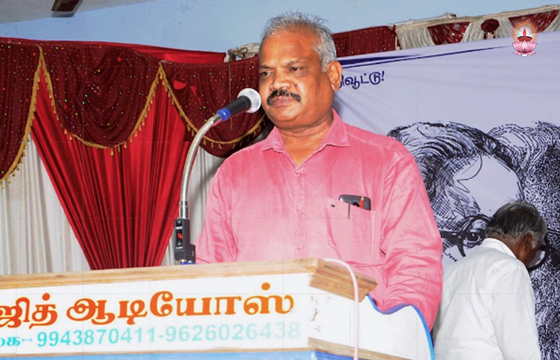
Caste-biased clergy ruined Dalit Catholics: Franklin Caesar Thomas
-
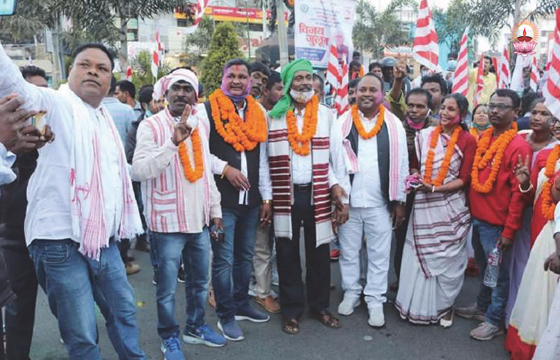
Indian state seeks tribal religion code in census
Hemant Soren, chief minister of the eastern Indian state of Jharkhand, has urged the prime minister to include a separate Sarna tribal religion code in the forthcoming cen-sus. He reiterated the state government’s demand to Prime Minister Narendra Modi in the wake of ongoing protests by tribal groups in Jharkhand.
Speaking at a webinar meeting of government think tank NITI Aayog headed by Modi, Soren said Jharkhand is committed to the resolution that his government passed last November. The meeting on Feb. 20 was attended by chief ministers of states and union territories in the country.
“We sent a proposal related to the demand for a separate Sarna code after we passed the resolution last year and believe that the federal government will consider it sympathetically,” Soren said.
Tribal people in the state have been demanding the Sarna code ever since the state was created in 2000.
“Tribal civilization, culture and systems are completely different. The Sarna code demand has been in existence for years to establish a place for tribal people in the census,” Soren added.
The state government convened a special assembly session and passed a resolution on Nov. 11 to send the federal government a letter recommending it recognize the Sarna religion and include a separate code for it in the 2021 census.
For many years protests and meetings have been held by tribal groups in Jharkhand and elsewhere pushing the same demand. -
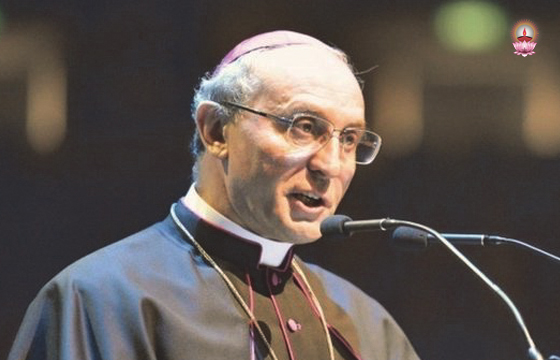
Italian prelate appointed new nuncio to India
Pope Francis on March 13 appointed Archbishop Leopoldo Girelli, an Italian prelate, as the new apostolic nuncio to India.
Archbishop Girelli was the nuncio to Israel and Cyprus and apostolic delegate to Jerusalem and Palestine until now, according to Archbishop Felix Anthony Machado of Vasai, the secretary general of the Catholic Bishops’ Conference of India. He succeeds Archbishop Giambattista Diquattro, another Italian who was transferred to Brazil, South America, in August 2020.
Archbishop Girelli was born in Predore (Bergamo), Italy, on March 13, 1953. He was ordained a priest on June 17, 1978. He speaks Italian, English and French.
With a doctorate in Theology, he entered the Vatican Diplomatic Service on July 13, 1987. To prepare for the diplomatic service, he completed the course of study at the Pontifical Ecclesiastical Academy in 1984.
He served nunciatures in Cameroon and in New Zealand, in the Section for General Affairs of the Secretariat of State of the Holy See, and in the nunciature in the United States of America. -
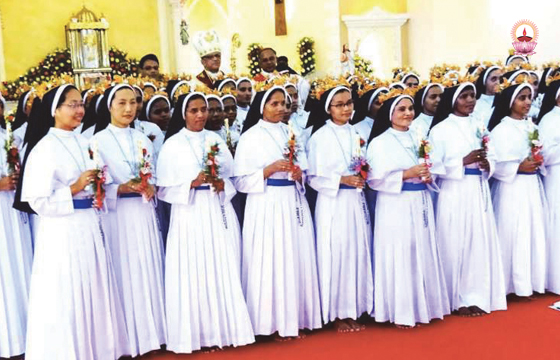
Top court favours Indian nuns’ struggle for tax exemption
India’s Supreme Court has ended the long-running litigation of a congregation of nuns against the Kerala government by ruling that Catholic nuns should not pay tax for their residential buildings. The March 1 ruling that favoured the Sisters of the Adoration of the Blessed Sacrament (SABS) applies to the convent buildings of more than 35,000 nuns living in Kerala, officials said.
“The order benefits not only us but also other religious congregations in the state,” said Sister Grace Kochupaliyathil, the congregation’s Kothamangalam provincial superior. The dispute began after a revenue officer refused to grant tax exemption to a newly built convent in Thodupuzha town in Idduki district. -

Archbishop D’Souza becomes assistant parish priest after retirement
Jesuit Archbishop William D’Souza, who retired recently as the head of Patna archdiocese, on March 1 became an assistant parish priest.
Archbishop D’Souza, who on March 5 turns 75, the mandatory retirement age of bishops, is the new assistant pastor of St Stephen’s church, in Danapur Cantonment area, outside Patna, capital of Bihar state. -

Vatican to probe allegations against Mysore bishop
Catholic laity groups in India have welcomed the news that the Vatican has initiated a probe into allegations against Bishop Kannikadass Antony William of Mysore. The Vatican has finally set up an enquiry commission to look into all the allegations against Bishop William, says a press note from the Association of Concerned Catholics, a pan-Indian group that raised the allegations initially.
-
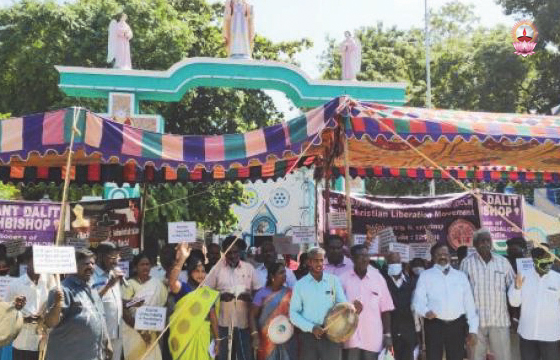
Dalits want the new Archbishop of Pondicherry-Cuddalore to be one of their own
Dalit Catholics in the Archdiocese of Pondicherry-Cuddalore, southern India, and Catholics in the dioceses of Tamil Nadu are calling for the appointment of a Dalit bishop.
Dalit Catholics raised the issue of caste discrimination in a protest on 29 December 2020. Last Saturday they organised another protest in Villupuram, Tamil Nadu, calling for the appointment of a Dalit archbishop to the Archdiocese of Pondicherry-Cuddalore. -
Priest who assaulted bishop suspended
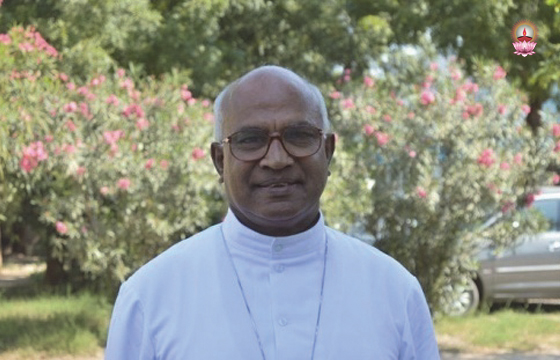
A Catholic priest, who recently assaulted his bishop, has been sus-pended, according to a letter from the victim prelate. In a letter to Father Varghese Palappallil, Bishop Pius Thomas D’Souza of Ajmer cited the second section of Canon law 1370 to inform his priest assaulter that his action has incurred “Latae Sententiae Interdict and suspension” from all priestly duties and priestly ministry.
Father Varghese Peter Palappallil has denied that he has assaulted his superior, Bishop Pius Thomas D’Souza of Ajmer, and accused the vicar general of spreading “baseless and motivated lies” and “imaginary stories.” -
Catholics want Holy Week spared as Indian polls approach
The laity council of the Indian bishops’ conference has urged the country’s election commission not to hold state assembly elections in several states during Holy Week. Elections are due to take place in April in federal-ruled Pondicherry and in Assam, Kerala, Tamil Nadu and West Bengal states.
“Holy Week begins this year on March 28 starting with Palm Sunday and goes through Maundy Thursday, Good Friday, Holy Saturday and Easter Sunday on April 4. The entire week is of great significance to Christians all over the world,” laity council secretary V.C. Sebastian said in a statement on Feb. 16.
Sebastian said he submitted a letter a day earlier to Sunil Arora, the chief election commissioner, calling for Holy Week to be spared when finalizing dates for the state elections and suggested an alternative date after April 15.
Many Christian institutions and facilities are often used as polling stations, especially in rural areas, while Christians themselves are assigned election duties, which would be awkward if polls are held during Holy Week, he added.
“Assembly elections in Karnataka state last year were held at a time which meant observance of Holy Week became difficult,” he claimed. “Such factors should be considered while finalizing the election dates.”
Cardinal George Alencherry, the major archbishop of the Syro-Malabar Church, also wrote to the election commissioner asking him to take Holy Week into consideration when deciding the dates for the state election in Kerala.
“Since Christian officials will have to discharge their election duties, the date should be on a day that will not clash with Holy Week services,” the cardinal said in the letter dated Feb. 16.
A decision taken in this regard would be favorable and show consideration for the religious interests of Christian voters, election officials and politicians, he said. -

Catholics ask Indian state to scrap fishing project
Catholic leaders are among those opposing a multimillion-dollar overseas deep-sea fish-ing project in Kerala that they say threatens the livelihood of ordinary fisher people in the southern Indian coastal state.
Following criticism from opposition leaders and rights groups, the communist-led state government withdrew two memoranda of understanding it signed with a US-based firm that allegedly violated the state’s fishing policy and the rights of poor fisher people.
The government on Feb. 24 withdrew from the MoU signed with EMCC International India Pvt Limited, a US-based firm, for a US$680 million project that purportedly aims to revamp and modernize the state’s fishing industry.
The government also canceled another MoU with the same firm for manufacturing 400 deep-sea fishing vessels and developing the state’s fishing harbors at a cost of some $400 million.
“But still we are not sure if it has scrapped the entire project. We want an assurance from the government that it will not move ahead with the project,” said Father Jacob G. Palackappilly, deputy secretary-general of the Kerala Catholic Bishops’ Council.
Many suspect the government quickly pulled out of the MoU a week after criticism began to surface in the media in the state, where elections are due in April-May.