Category Archives: Asian

Two hundred families in Karachi flee after three young Christian women are accused of blasphemy out of revenge

A group of Christians was attacked in West Bengal by Hindu fanatics during a prayer meeting at the home of a Church member, Shibu Thomas speaking told AsiaNews.

Thomas is the founder of Persecution Relief, an organisation that defends Christians from persecution in India.

Rev Anand Hari, pastor of the Full Gospel Evangelical Church, who was leading the prayer, was severely beaten. He is now in hospital in serious condition.

The attack took place in Panch Gachia, a village in Paschim Bardhaman district, around 7.00 am (local time). “The attackers did not spare even women,” Thomas lamented. In fact, in addition to the pastor, “there were eight women and two teenagers.

“About 15-20 minutes after the meeting started, 20 people suddenly broke into the house and started hitting everyone present with fists, kicks and sticks. Then they fled, leaving the wounded on the ground.”

The leader of Persecution Relief explained that the incident attracted the attention of others, who took the reverend to a government hospital where he is still recovering.

The aggression against worshippers at prayer represents a serious example of religious intolerance, less than a month before the general election.

“In India, it has become difficult even to pray in private homes used as places of worship. Churches are attacked, destroyed, torched and vandalised,” Thomas said, this despite the fact that “The Indian Constitution recognises freedom of religion and freedom of assembly.”

“The faithful were only praying,” he explained. If people get together and pray for the sick, their country, their family and even politicians, they are not doing anything wrong.

China, nearly 50,000 baptisms in the Catholic Church in 2018

At least 48,365 baptisms were celebrated in churches and Catholic communities in the People’s Republic of China in the year 2018. This is the number reported in the official publication of the Faith Institute for Cultural Studies, based in Shijiazhuang, the capital of the Chinese province of Hebei. The figures bring together data from 104 Catholic dioceses recognized by the Chinese authorities, scattered in more than 30 national provincial divisions. These data appear in substantial continuity with those of the previous year, when the Faith Institute had certified the celebration of 48,556 baptisms in the Chinese Catholic communities.

Also in 2018, as in previous years, the largest number of new Catholics baptized reported by the Faith institute (almost 13,000) was concentrated in the Chinese province of Hebei with other remarkable percentages of new baptisms celebrated in the Catholic communities of the provinces of Shanxi (4124), Sichuan (3707) and Shandong (2914). Faith institute also reported on baptisms celebrated in Catholic communities in the regions where Muslim populations and ethnic minority groups are found, such as Tibet (8 baptisms), Hainan (35), Qinghai (43) and Xinjiang (57).

China recommits to sinicisation of religion

“There will be no official or unofficial church when the church is united,” he said. Asked if it meant the so-called underground church would be forced to dis-appear, he said: “Don’t you want the church to be united? A church schism is not the fundamental aspiration of Catholics.”

Bishop Zhan said those Catholics who refused to join the official church were acting in their personal interests, but there was no timetable for the integration of the underground church — those who have refused to register with the government — with Beijing’s hierarchy.

“Everyone works hard and works together,” he said. The push to “Sinicise religion” — make it more culturally Chinese — was introduced by President Xi Jinping in 2015 and written into party orthodoxy in 2017. Experts see it as an attempt by the officially atheist Communist Party to bring religions under its absolute control.

“The agreement is provisional only, and we will improve it in the future,” Cardinal Filoni said after celebrating Mass in Hong Kong March 5.

Caste-away: Dalits seek escape through conversion in Nepal

The Christian community in Nepal has not been spared the wrath of society’s caste-based inequality, even though bottom-rung Dalits are increasingly turning to Christianity as a means to escape their fate.

Religious conversions are illegal in Nepal but the numbers suggest many consider it a risk worth taking as the “untouchables” are among the most oppressed by this complex social system, which leaves no sphere untouched. Testament to how legions of Dalits are prepared to gamble on breaking the law in search of a more dignified life, Nepal now harbours one of the fastest-growing Christian populations in the world.

The Federation of National Christians Nepal (FNCN) estimates there are 12,000 churches in the country and millions of Nepalese are believed to have turned to Christianity despite a 2011 census claiming Christians make up just 1.4% of the population, or several hundred thousand people. A whopping 65% of the newly converted are Dalits, according to the FNCN.

There are between 3.6 million and 5 million Dalits in Nepal, which means they could comprise as much as one fifth of the total population.

There are three Dalit sub-groups: those who live in the hilly regions, the mountain dwellers, and the Madeshi Dalits of the Terai, a lowland region in the south that extends to northern India.

The discrepancy in numbers is partly due to so many having legally changed their surname to make it sound like they belong to a more privileged caste as a last-ditch attempt to ease the discrimination they so often face.

Young Bangladeshi Catholics told to turn off phones

In a Lenten message to young Catholics in Bangladesh, Cardinal Patrick D’Rozario of Dhaka called on them to get closer to Jesus Christ and to refrain from using their mobile phones on every Friday leading to Easter Sunday. “My dear young people, during this Lent I appeal to you for a unique sacrifice. I request you to abstain from using mobile phones from 6 a.m. to 6 p.m. every Friday starting from Ash Wednesday. During this time, you can try to strengthen your relationship with each other and with Jesus Christ,” Cardinal D’Rozario said.

His message resonates with Pope Francis’ call to young Bangladeshis during his visit to the nation in 2017. The cardinal reiterated his appeal during his homily at the Ash Wednesday Mass at Holy Rosary Catholic Church in central Dhaka on March 6 where he was the main celebrant.

“I know, my dear young friends, you love your mobile phone, but it should not be more than your love for each other and for Jesus Christ who saved mankind from sins,” he told more than 3,000 faithful.

“There is a madness in today’s world — we need to grab everything on our way. But remember we came with nothing and nothing will go with us. Only our good deeds will remain, so let’s do good to others as much as we can.”

“I take the cardinal’s message positively, I have serious doubts whether young people, who are seriously addicted to their smartphones, will pay heed to his call. I think the prelate could have asked them to reduce mobile phone use every day,” William Nokrek, a Garo Catholic and former president of Bangladesh Catholic Students’ Movement.

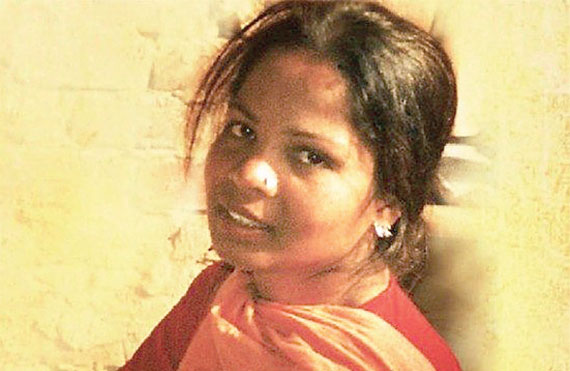
Two hundred families in Karachi flee after three young Christian women are accused of blasphemy out of revenge

Charges of desecrating the pages of the Qurân saw three young Christian women, including two minors, placed under arrest. It was later discovered that none of the charges were true, but by then the news had spread across their Karachi neighbourhood, provoking a violent reaction by local Islamic radicals who forced some 200 Christian families living in the area to abandon their homes to save themselves.

In Pakistan the accusation of blasphe-my-even without evidence-triggers action by Muslim extremists. Thankfully, Christian clerics were able this time to intervene quickly and mediate the affair, which ended peace-fully. One of the clerics, Fr Saleh Diego, a member of the Justice and Peace Commission of the Catholic Bishops’ Conference of Pakistan (CBCP), told AsiaNews that “police released the young women, who now live at a secret location for security reasons.”

The three victims falsely accused of insulting Islam are Permisha, 16, Suneha, 15, and Sunaina, 22. The latter is married. All live in a predominantly Christian part of the Farooq-e-Azam district.

At the centre of the incident is a woman related to all three, Mrs. Khurshid Bibi, who is the grandmother of the first two and Sunaina’s mother-in-law.

In January 2019 she rented a flat to a Muslim couple, Fayaz and Samina Riaz. After three weeks, however, given the disrespectful behaviour of the couple, she asked them to leave the premises.

On 19 February, the three Christian women went to the flat owned by their relative to clean it. Since the Muslim couple had not yet moved, they asked Fayaz and Samina to take away their belongings so they could clean the rooms. At that point, Samina, by her own admission, decided to accuse the three of blasphemy.  She went outside and started screaming that the “kafirs” (infidels) had stolen a copy of the Koran and thrown it into a tub.

Her screams attract the attention of Muslims, who surround the area and attacked several Christian homes causing damages.

Philippine Bishop: Duterte’s drug war is ‘illegal, immoral and anti-poor’

A Catholic bishop in the Philippines said his government’s controversial war on drugs is really a war against the country’s poor.

“There is no war against illegal drugs, because the supply is not being stopped. If they are really after illegal drugs, they would go after the big people, the manufacturers, the smugglers, the suppliers. But instead, they go after the victims of these people. So, I have come to the conclusion that this war on illegal drugs is illegal, immoral and antipoor,” said Bishop Pablo Virgilio David of Kalookan. Sign up for NCR’s Copy Desk Daily, and we’ll email you recommended news and opinion articles in each weekday.

The Philippines has suffered for years from widespread drug abuse, principally shabu, a cheaply produced form of methamphetamine. President Rodrigo Duterte ran for office promising a crackdown on drug use, and since he took office in 2016, rights groups say more than 20,000 people have been killed in extrajudicial killings, mostly carried out by the country’s police.

Church leaders have grown increasingly critical of the violence. The country’s Catholic bishops conference acknowledged in a Jan. 28 pastoral message that they had been slow in responding as a “culture of violence has gradually prevailed in our land.”

The bishops spoke “of mostly poor people being brutally murdered on mere suspicion of being small-time drug users and peddlers, while the big-time smugglers and drug lords went scot-free.” While they said they had “no intention of interfering in the conduct of state affairs,” they said they had “a solemn duty to defend our flock, especially when they are attacked by wolves.”

Duterte has repeatedly slammed the church in response to its criticism, and David, who also serves as vice president of the bishops’ conference, has become the principal target of Duterte’s angry outbursts at the church.

FOR CARD SAKO, THE POPE’S VISIT TO THE UAE BRINGS A MESSAGE AGAINST HATRED, VIOLENCE AND PERSECUTION

Anti-Christian persecution in the Middle East is a major concern, said Pope Francis in Angelus before leaving for the United Arab Emirates (UAE), where he remained, something Chaldean Patriarch Card Louis Raphael Sako stressed as he spoke about the first papal visit to a Gulf State.

With persecution in Iraq, Syria and Yemen in his mind, the Pope will try to turn a page in ChristianMuslim relations in order to renew the journey of peace.

The 70-year-old cardinal, originally from Zakho in northern Iraq, plays a leading role in interfaith dialogue in his country.

“Pope Francis is saying that this is enough. Let us live in peace, love, tolerance and renounce violence and hatred,” Card Sako noted, adding that in the UAE, the Pope promoted Christian-Muslim outreach, trying to oppose any fanatical, violent or hateful discourse.

According to the prelate, the pontiff will raise awareness among the believers of various religions of the situation of Christians in the region and will refer to the values found in various sacred texts and scriptures, which call for human coexistence.

CASTE-AWAY: DALITS SEEK ESCAPE THROUGH CONVERSION IN NEPAL

The Christian community in Nepal has not been spared the wrath of society’s caste based inequality, even though bottom-rung Dalits are increasingly turning to Christianity as a means to escape their fate.

Religious conversions are illegal in Nepal but the numbers suggest many consider it a risk worth taking as the “untouchables” are among the most oppressed by this complex social system, which leaves no sphere untouched. Testament to how legions of Dalits are prepared to gamble on breaking the law in search of a more dignified life, Nepal now harbours one of the fastest growing Christian populations in the world. At least 12,000 churches have been built and millions are believed to have turned to Christianity despite a 2011 census claiming Christians make up just 1.4% of the population, or several hundred thousand people. A whopping 65% of the newly converted are Dalits, according to the National Christian Federation of Nepal.

WORLD GOVERNMENT SUMMIT 2019 IN DUBAI: SHAPING THE FUTURE OF THE WORLD

Shaikh Abdullah Bin Zayed said: “The Pope’s visit was a call for peace. Throughout history we see, people who make war are two types of people, politicians and religious leaders. That is why wanted to take a step towards achieving peace. Summit gathers 4,000 high-profile officials from 140 countries, heads of state “We must be responsible to put an end to our conflicts and try hard to put an end to the wars. “We may not succeed but we will most definitely try.

“Religions did not come to push people to violence. But we know it has been distorted throughout history to justify war and violence.”

He added: “The declaration that was signed during the papal visit was a call for peace.

“The UAE has decided to extend the declaration and initiate a Zayed fund for cohabitation. A fund will be dedicated to organisations making an effort to create peace and harmony among various communities. In order to promote the values of tolerance and fraternity all over the world. “We are happy that this document will be a part of our UAE school curriculum starting next year.

“We in the UAE were very proud to see 180,000 of our Catholic brothers gather for this event.

“This meeting was a message by the UAE The UAE are not only responsible to provide you with a good life but also respect your religion because it is our national duty and your right.”