Category Archives: Asian

Thai police round up dozens of Christian Pakistani refugees

A group of Pakistani Christian asylum seekers were arrested Dec. 19 by Thai immigration authorities in an early morning raid on a low-rise condominium in eastern Bangkok. An estimated 36 people, including around 12 women and an equal number of children, were detained after immigration officials showed up at the doors of several low-rent units of asylum seekers.

The immigration officers “came knocking on doors and when the people inside didn’t open up, the officers broke the doors down,” said Joseph, a Pakistani Christian refugee from Karachi, who learned of the details by communicating with arrestees via social media. One 20-year-old Christian man who sought to escape being arrested by jumping out of a window ended up with a broken leg. “The authorities took them all — even the kids and women,” Joseph (not his real name) said.

The Filipino fighting for a Japanese samurai’s sainthood

Historian Ernesto De Pedro with statues of Dom Justo UkonTakayama who was beatified in early 2017.

As Pope Francis visits Japan, an 83-year-old Filipino historian is hoping the pontiff will recognize a Japanese samurai who once offered his life for the faith.

Dom Justo UkonTakayama, or “Justus Ucondono” as missionaries fondly called him, was a warrior who fought under the banner of the cross in the land of the rising sun.

He was an eminent Japanese feudal governor who served under Japan’s three hegemons — Oda, Hideyoshi, and Toshiie — who unified Japan.

In 1587, Chancellor Toyotomi Hideyoshi took drastic steps against Takayama, who declined to obey the chancellor’s order to renounce the faith.

Takayama was baptized a Christian in Sawa Castle on June 1, 1563, when he was 11 years old.

For refusing to renounce his Christian faith, Takayama was sent to Manila as an exile on Dec. 21,1614. Months after his arrival, he died on Feb. 3, 1615 in the old walled city of Intramuros.

The faithful of Manila promptly presented the Japanese warrior’s case to the Vatican for beatification. But after centuries passed, Takayama seemed to have been forgotten.

In 1963, Cardinal Rufino Santos of Manila endorsed the cause of the samurai to the Church in Japan. But there were no updates as church officials came and went.

Then one day, a Filipino history enthusiast passed by a statue of a Japanese man in the Plaza Dilao in the old city of Manila where the samurai supposedly baptized Japanese converts.

Historian Ernesto De Pedro wondered why a Japanese figure would standing as such in the Philippines. He did not give it much attention until a group of Japanese Protestant pastors came to inquire.

The Protestants were researching about a certain Takayama whose statue stands in the middle of Manila. They found nothing.

De Pedro wondered. “Why nothing?” he asked. He did his own research. He found out later that in Manila Takayama “Dom Justo Ukon Don.” In the papal archives, he was identified as “Ukon Don.”

Tamil remember their civil war dead despite government opposition

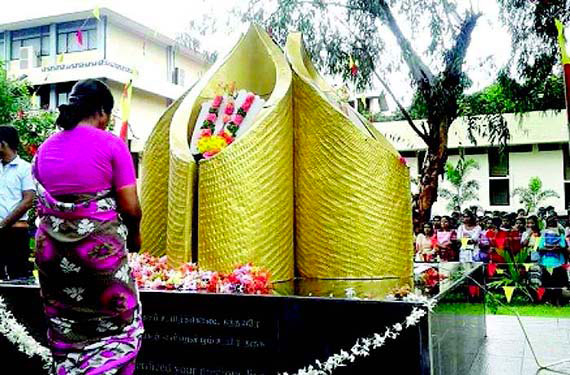
Thousands of Tamil in northern and eastern Sri Lanka have commemorated their relatives who died during and after the country’s civil war, which lasted more than a quarter century.

The main ceremonies were held last Wednesday, Maaveerar Naal (Great Heroes’ Day), as Tamils remembered those who died or went in missing in battle.

The Sri Lankan government has always opposed the remembrance. Under former President Mahinda Rajapaksa, brother of the current president, memorial ceremonies were banned as an apology for Tamil independence ideology.

For their part, Tamil com-plain that under the first Rajapaksa the graves of thousands of Tamils were destroyed, whilst war monuments, luxury buildings and other structures were built on top “in an attempt to erase our memory and control us.” “The graves of our children were in a row in the cemetery of Kopai,” some Tamil told Asia-News. “At least 2,000 people were buried there, but in March 2011 soldiers arrived and demolished everything.”

Mindanao rights group welcomes lifting of martial law

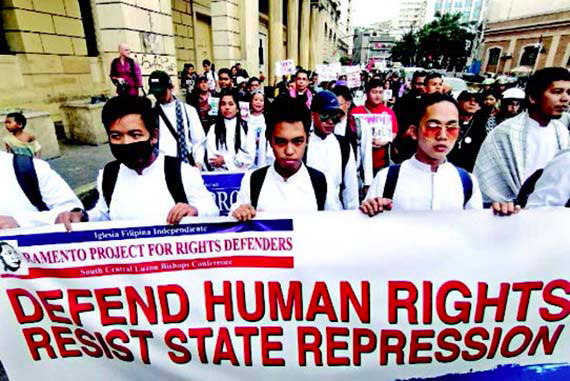
A human rights group in the southern Philippines has welcomed a  government statement announcing the imminent lifting of martial law across Mindanao, but it called for an international probe into alleged atrocities committed by the military while it has been in force.

The group BarugKatungod (Stand for Rights) said two and a half years of martial law in the region had resulted in more than 162 killings. At least 704 cases of “fabricated charges,” 284 cases of illegal arrest and detention, 1,007 victims of aerial bombardments and the forced evacuation of at least a million people were also reported.

“This announcement to end martial law will ultimately not bring relief for all the victims,” said Bishop Redeemer Yanez of the Philippine Independent Church, convener of the rights group. The presidential palace announced on Dec. 10 — International Human Rights Day — that President Rodrigo Duterte will not seek another extension of martial law in Mindanao.

Islamabad, 629 child brides sold to China

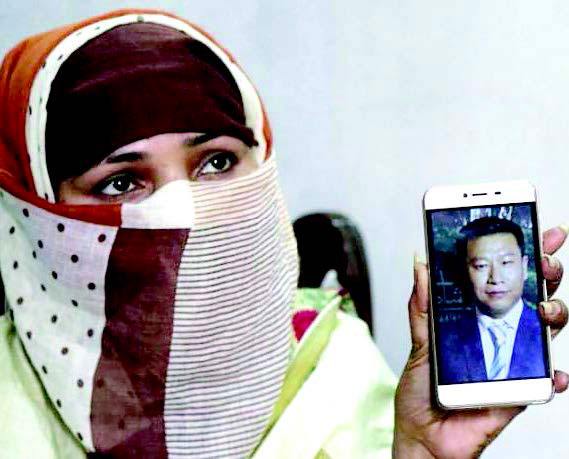
At least 629 Pakistani girls sold as enslaved brides to Chinese husbands. This is the official number of the recent phenomenon of trafficking in women from the South Asian country to the Chinese giant. This was revealed by an investigation by the Associated Press, which managed to have the original reports of the complaints filed since 2018.

However, according to investigators, the phenomenon is far more extensive, if only the judicial authorities had continued to register the complaints at the same pace as the first few months. After an initial investigative momentum, there is a progressive slowdown in the registration of cases.

People “informed of the facts” motivate this contraction due to pressure and interference from the Islamabad government. In fact, it would have exercised its influence to curb investigations so as not to damage the “profitable” link with Beijing.

Proof of this is the acquittal of 31 Chinese in a single case of trafficking in human beings, freed by the court of Faisalabad in October. According to some family members of the victims, who speak under anonymity, the accusing victims later refused to testify against their torturers because of threats or for compensation received to keep silent.

Christian children given Islamic names in Pakistan to avoid abuse: bishop

Christian parents in Muslim-majority Pakistan are giving their children Islamic names to protect them from religious abuse at school, according to a local bishop.

Bishop Samson Shukardin of Hyderabad has told Catholic charity Aid to the Church in Need that families belonging to minority faiths feared their children would be targeted for discrimination.

“Many minorities give their children Islamic names, so they will not be singled out as Christians and become potential targets for discrimination in primary or secondary schools or at the college level,” the bishop said in an article on the charity’s website.

“In many cases, minority students do suffer abuse in public schools.”

Textbooks in schools negatively depicted minorities who were considered infidels, which promoted prejudice in the classroom against fellow students, he said.

Bishop Shukardin spoke of a climate of fear among Christians, saying Islamic extremists wrongly associated them with the West. Other minorities as well as moderate Muslims were also at risk of attack, he said, while raising concerns of kidnappings of Christians, forced conversions to Islam and forced marriages, echoing fears made by other clergy in the country.

Treatment of religious minorities in Pakistan grabbed the international spotlight in May when Catholic woman Asia Bibi fled the country after spending eight years on death row for speaking against the Prophet Muhammad.

Bibi’s conviction on blasphemy charges was earlier overturned on appeal and she released from prison, sparking violent protests from hardline Islamists.

The contentious blasphemy law is aimed at promoting Islam and uniting the country, but rights groups say it has been misused by hardliners to persecute religious minorities.

Religious leaders from the different faiths earlier this year called on Prime Minister Imran Khan’s government to safeguard the rights of minorities and women.

New Vatican post boosts Tagle’s papal chances

A former envoy to the Holy See has expressed belief that the chance of Manila archbishop, Cardinal Luis Antonio Tagle, of becoming the first Filipino Pope may have been boosted with his new appointment to a top Vatican post.“Speaking in practical terms and the ways of the world, of course, he will be more known by those electing the Pope. Although he is already known, he will be further known,” said former Philippine ambassador to the Vatican Henrietta de Villa in an interview with reporters.

This Japanese painter found the faith through sacred art

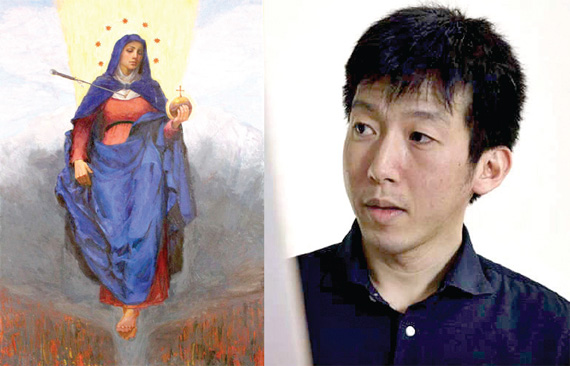
Osamu Giovanni Micico had never read the Bible, knew nothing of the stories of Christ in the gospels, and had never heard of the apostles, when his experience studying sacred art in Italy brought him to the Catholic faith. “When I came to Italy, painting was the only street for me as far as my profession goes. Thank God, that is also where God gave me my spiritual rebirth,” Micico told CNA.

Catholicism “transformed my life. The way I relate to others, the way I view the world. And the direction I’m taking in my life. The meaning of suffering. It all changed. My conversion gave life to death.”

From his childhood and adolescence in Tokyo, Micico was interested in drawing and painting, but he originally pursued a science-based career to please his parents.

During university, however, he encountered an artist who inspired him to pursue his passion for painting.

The 37-year-old artist moved to Florence in 2008 to study the paintings of the Old Masters, such as Michelangelo and Leonardo da Vinci. He told CNA that at the time he mostly painted landscapes or portraits, except when he copied the great masterpieces to learn from them. But he did not know what he was looking at.

“I was with my Catholic friend, asking my friend, who are those fishermen?” the artist said. In a way, he noted, he encountered the gospel the same way it was encountered by people in the Middle Ages who could not read, through the symbols of art.

“I was ‘reading’ those paintings before I knew the gospel. I didn’t know what stories they represented,” he explained.

“I think like music, those paintings spoke to me with harmony and it animated my soul. It was not just technique – that they made a realistic painting – but there was something else that was very holy there.”

Another personal encounter was influential in Micico’s conversion: his friendship with Irish religious artist and Catholic Dany MacManus, who was then living in Florence. While Micico still knew nothing about the Bible, MacManus invited him to a lecture he was giving on St John Paul II’s Theology of the Body. “That left an impression,” Micico said.

MacManus became Micico’s godfather at his baptism in 2010. “Art was the entrance. I think that even without words, like with the music of Bach, one can intuit the beauty of a creator,” he said. “Ultimately, God the merciful was represented in the painting … That’s what spoke to me.”
Micico now creates sacred art himself.

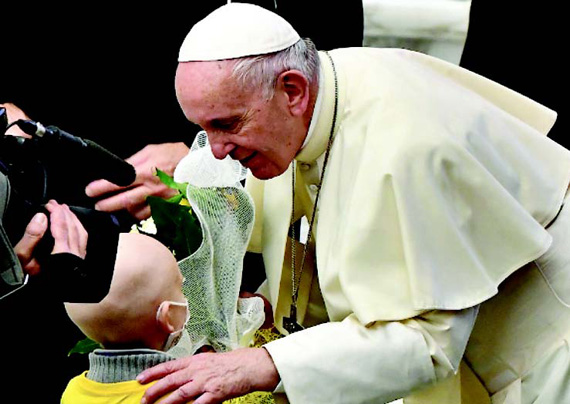
Pope praises Thailand’s commitment to peace

Pope Francis has praised Thailand for promoting harmony and peace in a video message ahead of his visit to the kingdom that begined on Nov. 20.

“In this world that too frequently experiences discord, division and exclusion,” Thailand has shown commitment to work hard “to promote harmony and a peaceful coexistence,” he says.

This commitment, he says, “can serve as an inspiration” for all the people around the world who are working to “promote a great, true development of our human family in solidarity, in justice and in living in peace,” Vatican News reported.

Pope Francis visited Thailand on his 32nd Apostolic Journey from Nov. 20-23 before heading to Japan.

In his message, he said he will have the opportunity to meet and “encourage” the Catholic community of Thailand “in their faith and in the contribution they make to the whole of society.”

He is hoping to “strengthen the bonds of friendship that we share with many Buddhist brothers and sisters.”

“I trust that my visit will help to highlight the importance of interreligious dialogue, mutual understanding and fraternal coope-ration,” says the Pope.

He thanked the people of Thailand “from the bottom of” his heart for all the preparation that is being made for his visit.

This is the first papal visit to Thailand in nearly four decades following the journey made by Pope John Paul II in 1984.

Pope’s Asia visit ‘shows concern for marginalized’

Pope Francis’ visits to Thai-land and Japan show his love for marginalized communities, says Cardinal Charles Bo of Yangon, president of the Federation of Asian Bishops’ Conferences. In his fourth visit to Asia, Pope Francis is scheduled to arrive in Bangkok on Nov. 20. Three days later, he leaves for Tokyo and nuclear-bombed Hiroshima and Nagasaki before returning to Rome on Nov. 26.

Pope Francis has “chosen countries where the Catholic community is a minority. His concern for communities on the margins has amplified their presence,” Cardinal Bo said in a statement.

Two years ago, “he chose to visit two countries where the Christian presence is so small. Christianity was in Myanmar for 500 years. His visit made this small flock to be known to the world,” said the cardinal.

In his 2017 Asia visit, Pope Francis covered Muslim-dominated Bangladesh and Buddhist-majority Myanmar, the base of 71-year-old Cardinal Bo.

Pope Francis became the first Pope to visit Myanmar, where Christians form just 6 percent of a population of some 54 million people. Catholics make up about one percent or some 750,000.