Category Archives: Asian

Missionaries spread the faith in Bangladesh

Catholics across Bangladesh are engaging in month-long activities undertaken by the local Church to observe and celebrate Extraordinary Missionary Month.

While observing World Mission Sunday in 2017, Pope Francis set October 2019 as the month to mark the 100th anniversary of Pope Benedict XV’s apostolic letter Maximum Illud in 1919, a document on the Church’s mission to bring to the world the salvation of Jesus Christ.

The theme for this special month is “Baptized and Sent: The Church of Christ on Mission in the World.”

The Bangladeshi Church, consisting of two archdioceses and six dioceses with about 350,000 Bengali and ethnic indigenous Catholics, has outlined a series of programs to observe the “missionary nature” of the Church targeting faithful of all ages — children, young, adults and elderly.

The missionary month holds special significance for Bangladesh, where the Church’s advent and growth are credited to the extraordinary contributions of missionaries and martyrs, said Bishop Shorot F. Gomes, auxiliary bishop of Dhaka.

Myanmar prelate decries religious leaders’ silence over killings

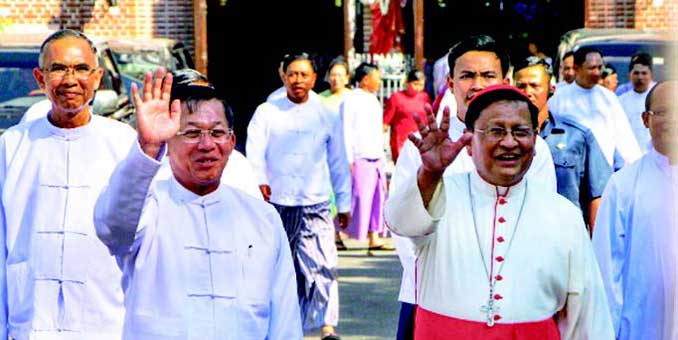
Cardinal Charles Maung Bo of Yangon says he is dismayed over the silence of religious leaders as civilians were killed and displaced as a result of ongoing fighting in conflicttorn Myanmar.

He said Oct. 1 that there were 500,000 Buddhist monks, 70,000 nuns, nearly 1,200 Christian pastors, more than 2,000 Catholic nuns and countless other religious leaders in the country.

“Some silence can be criminal. The war pursued is unjust and unholy,” Cardinal Bo said, adding that people’s prayers and rituals were being nullified by the blood and tears of innocent people. “Myanmar people are peace-loving and follow the guidelines of their religious leaders,” he said. “There is a huge potential for peace through religious leaders. Kindly raise your voice and speak out against this mutilating war. Innocent suffering will never go away. Their blood and tears will cry out from the grave.”

Nepal pastor goes hiding amid social media backlash

Hindu extremist threats have driven a pastor in Nepal into hiding following a leak onto social media of a restricted audience-interview he gave on his journey to Christ, sources said.

Pastor Sukdev Giri of Trinity Fellowship Church in Chitwan District has received death threats, he said. He has changed his phone number, but his family and friends are also receiving threatening calls, he told Morning Star News.

In a sign of how the Himalayan country has become increasingly radicalized, Pastor Giri, 59, has been unable to return home from ministry travels since a video of his comments hit YouTube in mid-August.

“It is the first time a Christian [in Nepal] has been targeted for sharing [on social and other media] about his past religion and introduction into Christianity,” legal advocacy group Alliance Defending Freedom’s allied attorney in Nepal, Ganesh Sreshta, told Morning Star News. “It is turning out to be a high-profile issue, with Hindu fundamentalist groups linked to prominent political leaders taking interest in this video.”

The video shot in March at the International Christian Media Workers Summit in Kathmandu, where Pastor Giri was one of the speakers on a panel, was available only to Christian audiences until a Nepalese Christian woman abroad posted it on YouTube.

During the panel presentation on advice for Christian media workers, Nepalese radio journalist Sunil Raj Lama asked Pastor Giri to talk more about belief systems in Nepal.

“It is not something I would discuss with anybody just anywhere, but his question was very genuine,” Pastor Giri told Morning Star News. “Although I had cautioned Lama to edit the video and not to circulate it outside the Christian circle, the [Christian] persons who were the first to watch it on a private channel insisted that, ‘It is a hard truth – people need to hear it.”’

The unidentified Nepalese woman abroad who had access to the private channel posted the video on YouTube on Aug. 11, and the flood of hostile comments began.

Marian pilgrimage boosts business in Pakistani village

Nasreen was depressed after a stroke left her husband paralyzed on his right side three years ago. Her youngest son took up his father’s job as a mason in the Catholic village of Mariamabad in Pakistan’s Punjab province.

“Suddenly our sole breadwinner became bedridden. The loans kept climbing. I felt helpless as an unskilled housewife,” the 46-year-old mother of five told ucanews.com.

That was until Lahore Arch-diocese announced that the 70th annual pilgrimage to the National Marian Shrine in Mariamabad would be held from Sept. 13-15 under the theme “St Mary: The woman of dialogue.”

More than a million devotees and young people from all over Pakistan travelled to the shrine on foot, by bicycle or in vehicles to pray and intercede with the Blessed Mother for special favours. They lit candles and incense sticks and covered the statue of the Blessed Mother with colourful embroidered dupattas (long scarves).

In keeping with tradition, thousands of Muslims also expressed their personal devotion to Mary, whom the Quran honours as the mother of Jesus, considered a prophet. The non-stop processions head toward a grotto that is a replica of the one in Lourdes, France.

An area in front of the Church of St Mary and St Joseph was allocated for a weekend market. The selection of goods and services included Christian gifts, souvenirs, gospel CDs, toys, clothing, food, beverages and even tattoo parlours.

Dream new South Asia of cooperation, harmony: Pattery

The head of the Jesuits in South Asia has called for a new South Asian Association of Regional Corporation that encourages greater economic exchanges and more socio-political harmony.

South Asia like rest of the world currently witnesses “an upsurge of the right-wing, with a lethal combination of nationalism and religion, the ongoing weakening of democratic processes and the apathy of the youth for social concerns,” says Father George Pattery, president of the Jesuit Conference of South Asia.

He was addressing the opening session of a two-day program to celebrate the 50 years of Jesuit commitment to social justice and reconciliation. Around 220 Jesuit social activists and their collaborators are attending the September 26-27 program at Navjeevan Renewal Center in Old Delhi.

The Jesuits in Social Action and the Vidyajyoti College of Theology, joint organizers of the program, terms it as convention to “walk with the poor, the outcastes of the world, those whose dignity has been violated, in a mission of reconciliation and justice.”

“Across the world there is an upsurge of the right-wing, with a lethal combination of nationalism and religion, the ongoing weakening of democratic processes and the apathy of the youth for social concerns. “And the young man went away sad because he was a man of riches’- the world seems to have been numbed into sadness of the plenty of the rich!”

South Asia is no exception. Majoritarian religious nationalism, the near-total compliance of the media to the desires of the ruling Govt, the populist methods over-ridding true democratic processes and the mob rule with the silent condoning by the Govts mark our situation today. While Sri Lanka is struggling with the terrorist threats, Bangladesh and Pakistan are on thin democratic threads, Afghanistan remain uncertain about its future. We, Jesuits of South Asia have to begin to dream of a South Asia, cradle of many religions and cultures, to grow into a credible socio-political entity to bring in fresh thinking. As Fr Arthuro Sosa said to us: “I want South Asian Jesuits to be players in international relations and peace initiative in S. Asia.” Fr George Pattery said.

Pak blasphemy accused acquitted after nearly 20 years

The Pakistan Supreme Court on September 25 acquitted a blasphemy accused who was earlier sentenced to death by the trial and high court, after nearly two decades.

The apex court, in its judgment, observed that the prosecution failed to prove the case against the accused, Wajeehul Hassan, who had earlier challenged his conviction, The Express Tribune reported.

Hassan was accused by a lawyer in 1998 for writing blasphemous letters to him.

During the hearing, Justice Sajjad Shah observed that the prosecution had failed to prove that the letters were written by Hassan and dismissed the case.

Church leaders warn Filipinos of martial law ‘horrors’

Church leaders have called on Filipinos never to forget the “horrors” of martial law, which was imposed across the country almost half a century ago. The declaration of martial law by late president Ferdinand Marcos resulted in thousands of human rights abuses.

Amnesty International recorded over 100,000 victims, with at least 70,000 people arrested, 34,000 tortured and 3,240 others killed.

Bishop Arturo Bastes of Sorsogon said Filipinos have to be reminded of the atrocities of martial law, adding that there is a “sinister plot… to erase the memory of the darkest period” in Philippine history.

He said “articles should be written… to remind Filipinos, especially the young, of the horrors of martial law imposed by Marcos.”

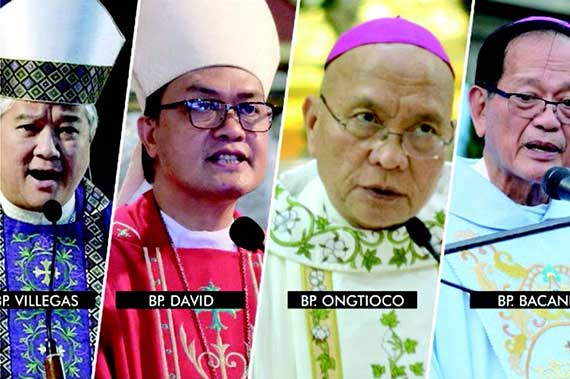
Retired Bishop Teodoro Bacani of Novaliches said Filipinos should remember how “oppressive and harmful” martial law was to the people. “It bred a culture of subservience and corruption from which we have not recovered,” he said.

Pope Francis to visit Thailand and Japan in November

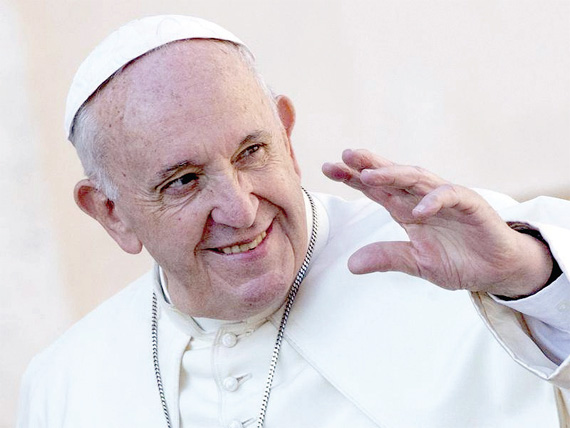
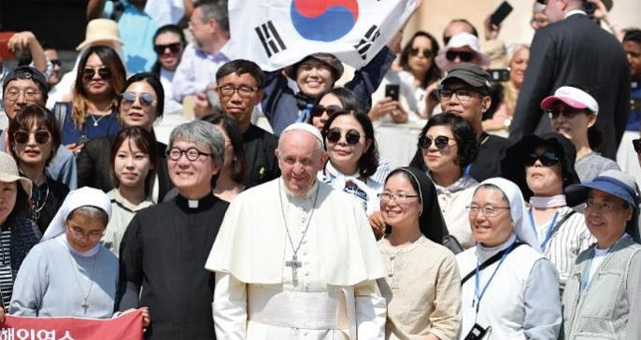
The Vatican confirmed on September 13 that Pope Francis will travel to Thailand and Japan in November with stops scheduled in Tokyo, Hiroshima and Nagasaki.

Pope Francis will visit Thailand on Nov. 20-23 in commemoration of the 350th anniversary of the Vatican Mission to Siam in 1669. The Pope will then travel on Nov. 23-26 to Japan, where the theme of his visit is “Protect all life.” In recent years, the Church has been working in Japan to respond to life issues and protect the most vulnerable. The Holy See Press Office said that the trip’s motto “protect all life” not only applies to respect for all human dignity, but also extends to the environment.

“In Japan today as well there are a pile of problems related to life and peace, in addition to the issues of economy, environment and relations with neighbouring countries. Moreover, recovery from natural catastrophes and nuclear plant accidents remain as persisting problems,” according to the Vatican statement.

The papal trip to Japan has been much anticipated after Pope Francis told journalists in January he was planning to travel to the country. AP reported on Sept. 13 that Pope Francis will meet with Prime Minister Shinzo Abe and the Japanese Emperor Naruhito during his visit to the country. Catholics in Japan make up less than 0.5% of the country’s population. Christianity was first introduced to Japan in the 16th century by Catholic missionaries, most notably St Francis Xavier. In the years that followed the Catholics in Japan suffered many waves of fierce persecutions with hundreds martyred, including 26 canonized saints who were executed by crucifixion in 1597 in Nagasaki.

New St Francis Xavier’s Catholic Church blessed in Oman

More than one thousand people attended the civil inauguration ceremony of the new St Francis Xavier Church, Salalah, which is located around ten minutes from the City Centre, Oman, on Sept 7.

Most of the parishioners comprise of Indian and Filipinos migrant Catholics.

The new church, which took around 18 months to complete, has a seating capacity of 600 people, and it also has a balcony with a view to the main altar and a multipurpose hall, thus bringing the total seating capacity of 1000 people.

Dignitaries present at the celebration included the Apostolic Nuncio, Archbishop Francisco Padilla, and His Excellency Ahmed Khamis Masood Al Bahri, Director of the Ministry of Awqaf and Religious Affairs.

The Apostolic Vicar of Southern Arabia, Bishop Paul Hinder OFM Cap was responsible for the Catholics in the UAE, Oman and Yemen, and several priests and religious sisters of the Vicariate were also present at the event.

Cardinal Bo leads interreligious group to Indonesia

Indonesian Vice President Jusuf Kalla on September 9 welcomed some inter-religious figures from Myanmar at his office in Jakarta, and held a discussion on tolerance, harmony, and situation of interfaith people in both countries.

The event was held through cooperation between the government and the Indonesia Inter-Religious Council (IRC) initiated by Din Syamsuddin, a national Muslim figure.

“The delegations of Myanmar’s inter-religious figures were here to share their views on how Indonesia maintains inter-faith harmony,” Syamsuddin remarked.

According to Syamsuddin, the vice president had highlighted Indonesia’s founding principles of Pancasila and Bhineka Tunggal Ika, an old Javanese termed translated as “Unity in Diversity,” the official national motto of Indonesia.

They have helped people lead a harmonious existence. Furthermore, religious moderation is expected to serve as a reference for other countries home to different religions.

Leader of Myanmar’s delegations Cardinal Charles Bo lauded the meeting and expressed the hope of taking a cue from Indonesia on equality among people of different faiths.

“We have seen a wide body of experience on how this Muslim-majority nation upholds equality without any discrimination,” Cardinal Bo remarked.