A ceremony for the 50th anniversary of the priesthood of the Archbishop of Colombo, Cardinal Malcolm Ranjith, 77, was held on 7 July, at the Auditorium of the Archbishop’s House in Colombo.
Also present was President Anura Kumara Dissanayake, who addressed the assembly in no uncertain terms: ‘The government will have to undergo an investigation to uncover the truth behind the Easter Sunday attacks (21 April 2019, ed.). It is a challenging task. However, we will ensure that justice is done to the victims.’
The event was also attended by Sri Lankan Prime Minister Harini Amarasuriya and other government ministers, religious leaders, ambassadors, commanders and the Inspector General of Police.
Dissanayake added that the government will listen to Cardinal Ranjith’s frequent requests for justice for the victims of the tragic attacks that left nearly 300 people dead. ‘The cardinal sometimes makes a quiet request, other times he becomes influential when he speaks about the victims of the Easter Sunday attacks. However, we will listen to him,’ he said.
Ranjith has always acted to demand transparency and accountability from the Colombo government, also criticising political leaders and institutions for failing to properly investigate and prosecute those responsible, acting as a moral voice and advocate for the affected families.
The second most senior cardinal in Sri Lanka after Cardinal Thomas Cooray, the Archbishop of Colombo and former Prefect of the Congregation for Divine Worship and the Discipline of the Sacraments, was ordained a priest on 29 June 1975 by Pope Paul VI in St Peter’s Square in the Vatican.
Category Archives: Asian
40 new priests ordained in Vietnam
The Catholic Church in Vietnam welcomed with great joy and hope the ordination of 40 new priests during June, the month of the Sacred Heart of Jesus.
According to the Vatican news agency Fides, the Diocese of Da Nang welcomed six new priests, “consecrated to be each an ‘alter Christus’ [‘another Christ’], to become pastors of the people of God, not to live for themselves but to be all things to all people,” said Archbishop Joseph Dang Duc Ngan, archbishop of Huế and apostolic administrator of Da Nang, in his homily at the ordination Mass on June 24 in the local cathedral before numerous faithful.
“A priest does not become perfect from the day of his ordination. The priesthood is a journey of daily growth in Christ and constant strengthening in the Holy Spirit to fulfill the mission of God and the Church with joy and true love,” the prelate emphasized.
Bishop Peter Le Tan Loi celebrated the ordination Mass of 13 new priests on June 25 at the Soc Trang Cathedral in the Diocese of Can Tho. During the Eucharist, the prelate invited the faithful present to “unite in prayer and accompany the new priests, so that they may always lead a life faithful to their pastoral identity: humble, holy, and dedicated to the flock.”
On June 27, the feast of the Sacred Heart of Jesus and the Day for the Sanctification of Priests, 21 new priests were ordained for the Archdiocese of Ho Chi Minh City (formerly Saigon). Archbishop Joseph Nguyen Nang said in his homily that “the priest is not like a robot of the modern age. In his ministry, the priest takes God’s will seriously so that, in every action — liturgical, pastoral, and charitable — he may transmit the good news.”
Fides also reported that at the Shrine of Our Lady of Bai Dau in the Diocese of Ba Ria, Bishop Emmanuel Nguyen Hong Son ordained six new deacons, also on June 27.
Philippine bishops’ conference calls for fair wages and accountability
Closing the 130th Plenary Assembly of the Catholic Bishop’s Conference of the Philippines, the bishops release a letter urging the government and Church institutions to bring awareness to the ongoing issue of decreasing minimum wage in the country and the harsh labour conditions.
In the midst of the ongoing disagreement on labour conditions and wages, the Catholic Bishops’ Conference of the Philippines (CBCP) released a pastoral letter, describing these issues as urgent and calling for immediate change. The bishops cited the prophet Micah 6:8, “act justly, love kindness, walk humbly with your God” as the foundation of their message.
The current minimum wage in Metro Manila, the largest metropolitan area in the Philippines, is 650 pesos, roughly equivalent to 9 euros for an eight-hour workday. These wages are insufficient for families to live off of, and as a result, many are suffering. “The Church must lead by example,” the letter stated, calling for religious establishments to offer adequate wages and fair labour conditions in the workplace.
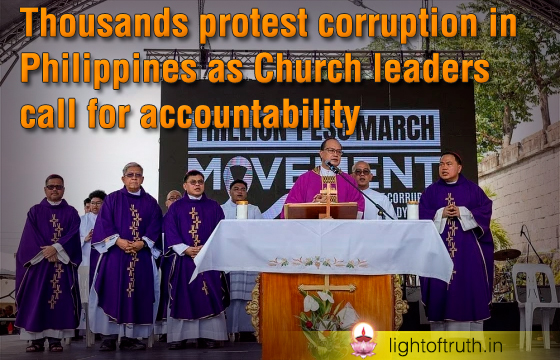
Along with poor working conditions, the bishops also called for a change in political leadership. They raised concerns regarding the lack of political accountability, as the country’s Senate recently delayed pursuing the impeachment process of Vice President Sara Duterte. The bishops described impeachment as a democratic tool that must be upheld to ensure truth and justice in a government.
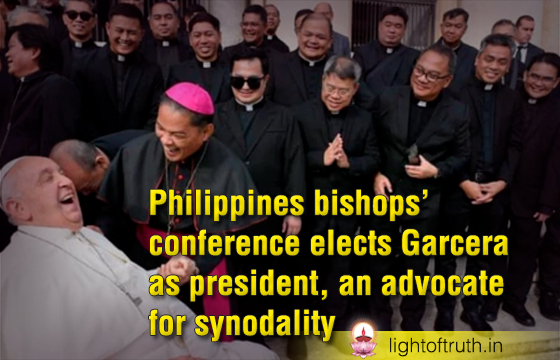
Outgoing CBCP president Cardinal Pablo Virgilio David, Bishop of Kaloon, signed the letter to show his support, while simultaneously concluding his term with the Conference. He will be succeeded by Archbishop Gilbert Garcera of Lipa, who will start in the role in November 2025.
Korean Church celebrates 100th anniversary of martyrs’ beatification
On July 5, the Archdiocese of Seoul, South Korea, marked the 100th anniversary of the beatification of the 79 Korean martyrs of the Gihae (1839) and Byeong-o (1846) persecutions with a Mass, the release of a new report on their martyrdom and a special exhibition, a press release of the Archdiocese’s website states.
“Even in the trials of persecution, these martyrs never abandoned their faith in the Lord. Their endurance deepened their faith, which ultimately bore fruit as true hope that overcame even death”, said the Archbishop of Seoul, Peter Soon-taick Chung, during his homily.
The 79 Korean martyrs of the Gihae and Byeong-o persecutions were beatified by Pope Pius XI in St. Peter’s Basilica on July 5, 1925. Paul VI then beatified a second group of 24 martyrs in 1968, and both groups, totaling 103 people, were canonized collectively by Pope John Paul II in 1984.
More than 1000 faithful gathered for the liturgy, at the Seosomun Shrine History Museum in Seoul, where 41 of the 79 martyrs lost their lives. According to the Fides news agency, in the 19th century the Korean Church estimates that approximately 16,000 Catholics were killed. Religious freedom was not granted to Catholics in Korea until 1895.
The press release explains that during the mass a new report titled “The Documentation of the Gihae and Byeong-o Persecutions” was also published by the Martyrs Elevation Committee of the Archdiocese of Seoul. This work drew from the royal chronicles, judicial records and state archives of the Joseon Dynasty who ruled at the time of the persecutions. The official documents and data from the time featured in the report have also been translated into Korean to make this information more accessible to scholars and the Catholic community.
“This is the first time that historical facts from official records—interrogations, reports, and directives from institutions like the Royal Secretariat and the State Council—have been carefully extracted, translated, and compiled, rather than relying solely on testimonies,” said Archbishop Chung. “Even though these were records written by the persecutors, the courageous faith and deep conscience of the martyrs stand out all the more clearly within them”.
‘Social Hackathon’ allows Thai youth to experience synodality
Students from Catholic schools throughout Thailand are taking part in a “Youth Social Hackathon” that provides them with opportunities and support to create a better world following a synodal dynamic. Organized by the Catholic Education Council of Thailand with the support of partners including the Archdiocese of Bangkok and the General Secretariat of the Synod, the four-day event invites teams from 12 Catholic schools across the country to investigate issues raised by the Synod that are found in their own communities and then propose creative solutions to those problems.
The event is inspired by startup tech “hackathon weekends”, says Dr Peter Monthienvichienchai, director of LiCAS News, the Archdiocese of Bangkok’s English-language news outlet. In the tech world, “hackathons weekends” allow hackers “to develop a product that they would go and pitch for funding to venture capitalists,” he explains. “What we’re doing here at the socialhackathon is that we use a similar format, but we ask the children here to try to solve issues in their community that matter to them.”
Instead of producing a tech product, Monthienvichienchai says, the students will “take a synodal journey with the people on the fringe of society, especially in their local community, listening to what their challenges, what their sufferings are, and come to together and attack the problem; come up with a solution; and pitch for funding.” At the conclusion of hackathon, judges will award funding to the most outstanding pitches “to make their solutions come true.”
The whole point, though, says Monthienvichienchai, “is to engage youth in a way that uses their language. It uses their energy.” At the same time, “for us, it’s an exercise that we’re listening to them. It’s showing them that we trust them to not only solve a problem, but to identify the problem that matters. And then the funding is really to empower the youth to take action and make their solution a reality.”
Regime change in Iran is bad idea, says Iraqi cardinal
Iraqi Cardinal Louis Raphael Sako says Israel’s attempted “regime change” strategy in Iran could “only worsen the situation” in the Middle East, where a US-brokered ceasefire has paused hostilities between Israel and Iran. The patriarch of the Chaldean Church in Iraq recalled Iraq’s bitter experience with the regime change and the US-led invasion during an interview with the Vatican’s Fides news service.
Regime change “is a matter for the citizens of the country” to decide, Sako said according to a June 25 Fides report. Sako said that Iraqi people, including the Christian community, suffered heavy losses in the past, and they feared that another war would only destroy the fragile peace.
“What has happened is sad. We have all experienced difficult moments of worry and fear. The world has lost its international order. Now we must regain common sense and reject the discourse of hatred, violence, and war.” “It is a pity if we destroy life and what has been built. Peace is a gift; we must welcome it and preserve it with enthusiasm, making the defense of peace an authentic life commitment,” Sako noted.
The cardinal said Israel’s military actions to weaken the Iranian regime were flawed from the beginning, recalling the experience of the Iraqis. “The sovereignty of countries must be respected, and problems should be resolved through sincere and courageous dialogue. Regime change is a matter for the citizens of a country. Imposing another regime would only worsen the situation,” he said. “Change must come from within if the citizens deem it necessary. Twenty-two years after the fall of the regime in Iraq, there is still no true citizenship, no law, no security, and no stability. Corruption and sectarianism persist,” he insisted. Despite the hardships and persecution faced by Iraqi Christians, they remain hopeful about the future, Sako said.
Shadowy extremist group claims Damascus church bombing
A little-known Sunni Muslim extremist group claimed responsibility on June 24 for a weekend suicide attack against a church in Damascus, while the Syrian government insisted they were part of the Islamic State group.
The June 22 attack killed 25 people and wounded dozens, striking terror into Syria’s Christian community and other minorities. A statement from Saraya Ansar al-Sunna said an operative “blew up the Saint Elias church in the Dwelaa neighbourhood of Damascus,” adding that it came after an unspecified “provocation.”
Syria’s Islamist authorities, who took power after ousting long-time ruler Bashar al-Assad in December, had quickly blamed the attack on the Islamic State group and announced several arrests on June 23 in a security operation against IS-affiliated cells.
IS did not claim responsibility for the attack. The Saraya Ansar al-Sunna statement, on the messaging app Telegram, said the government’s version of events was “untrue, fabricated.” The spokesman for the interior ministry, Nureddine al-Baba, said during a press conference on June 24 that the cell behind the attack “officially follows Daesh,” adding that Saraya Ansar al-Sunna was “not independent… as it follows Daesh.” Daesh is the Arabic acronym for IS.
At the funeral of some of those killed in Damascus’s Holy Cross Church, Greek Orthodox Patriarch of Antioch and All the East John X called the attack an “unacceptable incident.” Addressing Sharaa, the patriarch said, “The heinous crime that took place at Mar Elias Church is the first massacre of its kind in Syria since 1860,” referring to the mass killings of Christians in Damascus under the Ottoman Empire. “We refuse for these events to take place during the revolution and during your honourable era.”
Japan bishops on nuclear bombs: ‘This tragedy must not be repeated’
The Catholic Bishops’ Conference of Japan, as “the only bishops from a country to have suffered atomic bombings in war,” is urging the international community to abolish nuclear weapons once and for all in 2025.
“As we mark the 80th anniversary of the end of World War II,” the bishops wrote in a June 20 statement, “[we] carry deeply engraved in our hearts the heavy history and pain that atomic bomb survivors and citizens of Hiroshima and Nagasaki have suffered, and hereby declare our strong commitment to the abolition of nuclear weapons.”
Hiroshima is the site of the world’s first atomic attack on Aug. 6, 1945, while Nagasaki was bombed three days later. The bombings resulted in the estimated deaths of 140,000 people in Hiroshima and 74,000 people in Nagasaki by the end of 1945 alone.
In the years that followed, many of the survivors in Japan faced leukemia, cancers, and other terrible side effects from radiation, according to the International Campaign to Abolish Nuclear Weapons.
In their “Declaration on the Abolition of Nuclear Weapons 2025,” the bishops of Japan pledged their commitment to “convey the reality of the atomic bombings to the world and declare the inhumanity of nuclear weapons” as well as to “stand in solidarity with domestic and international movements for the abolition of nuclear weapons and promote actions to achieve this goal.” The statement came amid rising tensions in the Middle East over Iran’s growing nuclear capabilities.
The bishops pointed out that many still suffer the aftereffects of the bombings and that the environmental destruction caused by the explosions has continued to have “an enormous negative impact on global ecosystems.”
The bishops further slammed nuclear deterrence as an “ineffective” tactic. “The concept of nuclear deterrence is not only an ineffective means of resolving conflicts, but it also plunges the world into a ‘security dilemma’ that in reality pushes the world toward the brink of nuclear war. We cannot tolerate this kind of thinking,” they wrote.
Church in Seoul urges end to hostility, marks progress in inter-Korean relations
More than a thousand faithful gathered at the Myeongdong Cathedral for the annual “Day of Prayer for the Reconciliation and Unity of the Korean People,” an observance held by the Korean Church on the Sunday nearest June 25—the anniversary of the outbreak of the Korean War.
In his homily, Archbishop Peter Chung Soon-taick of Seoul said the prolonged division between North and South Korea has fuelled hostility and estrangement. “North and South have lived divided for over 80 years, nurturing hatred and animosity amid constant tension and confrontation,” he said. “In the South, indifference is growing, with people asking, ‘Why should we concern ourselves with the North?’ But we are one Korean people,” the prelate added. The Archbishop called on Catholics to take the first step toward reconciliation, citing the example of Jesus. “To overcome conflict and division, we must be the ones to reach out first, just as Jesus told us, ‘You give them something to eat,’” he said.
Archbishop Chung pointed to a recent development in inter-Korean relations, highlighting the mutual suspension of loudspeaker broadcasts along the border. He described the move as a modest yet significant step that helped ease long-standing tensions and created space for reimagining future ties between the two Koreas. He urged the faithful to begin the work of peace by abandoning animosity. He said peace on the Korean Peninsula and a new relationship between North and South “must begin by laying down hostility and hatred.”
Later in the day, the Archdiocese held a symposium at the Myeongdong Cathedral Spirituality Centre to commemorate the 30th anniversary of the Reconciliation Committee, which was established in 1995 by the late Cardinal Stephen Kim Sou-hwan.
Philippines gripped by online gambling crisis, says cardinal
Filipino Cardinal Pablo Virgilio David has denounced online gambling as the cause of “a new mental health crisis” in the Philippines. David, the 66-year-old bishop of the Diocese of Kalookan, attributed the problem to recycled hardware from now-outlawed Chinese gaming operators in the country.
In a Facebook post, Cardinal David shared an Inquirer newspaper editorial titled “Online Gambling and Broken Lives,” and said he was “calling attention to a new mental health crisis plaguing our country today”. The problem, said the cardinal, involved “fully legalized online gambling platforms using the recycled digital hardware of outlawed POGOs, short for Philippine offshore gaming operators, owned by licensed casino operators.”
POGOs are controversial gambling firms that were mostly owned by the Chinese and linked to human trafficking and other crimes. POGOS, which boomed during the presidency of Rodrigo Duterte, have been banned by President Ferdinand Marcos Jr., but are said to have resurrected in other forms.
Taking over from POGOs, online gambling is “now victimising not foreigners, but our own people, made available 24/7 online, more lucrative than traditional casinos, promoted by paid celebrities, accessible to Filipinos of all age levels, totally unregulated,” said David.
It is “wrecking the lives of poor people who get addicted to it”. “Jesus once warned those who cause the ‘little ones’ in society to stumble: ‘It would be better for him if a millstone were put around his neck and he be thrown into the sea’ (Luke 17:2),” said Cardinal David, the president of the Catholic Bishops’ Conference of the Philippines.