
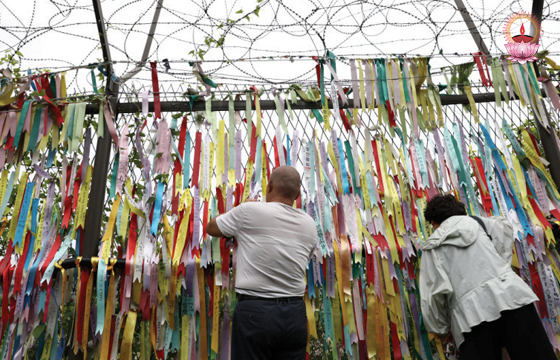
North Korean defectors who risked everything for freedom will speak on October 7 night at Liberty in North Korea’s annual Night of Freedom, which will be held online this year.
The hour long event will be held at 7 p.m. Eastern time and will include three stories from defectors who escaped one of the world’s most repressive regimes, along with appearances by celebrities, raffles, and never-before-released short film.
Liberty in North Korea plans to broadcast the event from its headquarters in Long Beach, California. It will host a similar event on Oct. 15 at 7 p.m. Pacific time.
Anyone interested in participating can sign up for free on Liberty in North Korea’s website. So far, over 2,000 people world wide have done so. Liberty in North Korea CEO Hannah Song said it will be the group’s first large online event.
“What are we willing to give up for freedom?” Song said in an interview with The Christian Post. “When I hear the risks our North Korean friends take, these are things I can’t even begin to fathom deciding. I’ve had to think about that very deeply every time I’ve heard their stories. What is my freedom to me?”
Along the 3,000-mile trek from North Korea to South Korea, defectors must cross the North Korean border, dodge human traffickers and the Chinese police, and brave mountains and jungles. The defectors speaking at the event each fled North Korea in search of different kinds of freedom, Song said.
Category Archives: Asian
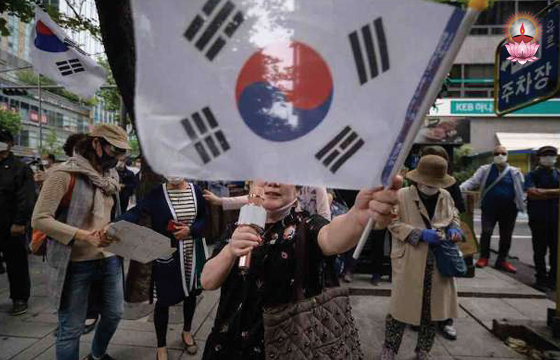
Bishops concerned as South Korea adopts abortion law
South Korea’s government has adopted a draft law to legalize abortion until the 14th week of pregnancy, but Catholic bishops in the country said it violates the foetus’s right to life.
The government on Oct. 7 adopted the bill that plans to ban abortion after 14 weeks of pregnancy except in the case of a sex crime or if it affects the mother’s health or severe congenital disabilities for the foetus.
The law bans abortions after 24 weeks of pregnancy, the Justice Ministry said.
Although the government has adopted the bill, the public have been given around 40 days to submit their views before it is sent to the National Assembly for approval.
The Catholic Bishops’ Conference of Korea has been opposing the move to legalize abortion since August when the government was finalizing the draft bill.
In a letter submitted to President Moon Jae-in on Aug. 20, the bishops voiced their concerns about legalizing abortion. They said human life must be protected “from the very moment of conception.”
The government began to amend the law prohibiting abortion in April 2019 when the South Korean Constitutional Court ruled that the ban was unconstitutional. It asked the government to legalize abortions by the end of 2020 or consider the abortion ban legally invalid.
The bishops said abortion is not the solution to issues related to marriage and pregnancy. Most such issues could be solved by changing the current social culture which makes “women solely responsible for pregnancy and childbirth,” the bishops’ conference said in a statement on September 2 on its website.

Police arrest well-known Vietnamese rights activist
Police in southern Vietnam have captured a famous blogger and rights activist who has been praised for bravely struggling for democratic freedom and accepting persecution.
The Public Security Ministry announced on Oct. 7 that police arrested Pham Thi Doan Trang and searched her boarding house in Ho Chi Minh City. Trang is accused of campaigning against the state and spreading information and documents against the communist government. The Hanoi resident will be detained for four months as her case is investigated.
Le Nguyen Huong Tra said police arrested Trang at midnight of Oct. 6 while she stayed at a boarding house in the city.
“I am not surprised at my friend’s arrest after she published reports on the lethal land clash between police and farmers in Dong Tam Commune,” Pham Thanh Nghien, Trang’s close friend, said. The clash claimed the lives of three police officers and farmers’ leader Le Dinh Kinh.
Nghien, a Catholic mother of one, said Trang’s arrest, which came when delegations from Vietnam and the US were holding their 24th annual human rights dialogue via virtual sessions on Oct. 6-7, showed that the Vietnamese government refused to respect human rights.
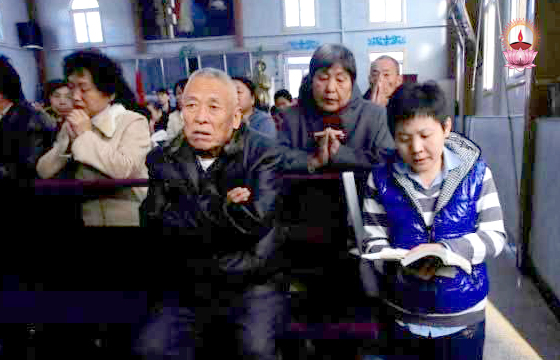
Beijing Betrays ‘Patriotic’ Church
The communist – approved Catholic Church in China is facing persecution despite official status. Officially registered churches are harassed regardless of belonging to the Chinese Patriotic Catholic Association (CPCA), a control arm of the Chinese Communist Party (CCP). This comes from a recent report by Bitter Winter, a magazine on human rights and religious liberty in China.
A CPCA deacon in Hebei province near Beijing explained his church joined the CPCA hoping the communists would allow them to worship in peace.
“But the situation has changed, and registered churches are sometimes harassed more than the unregistered ones,” he said. “They also have their crosses removed.”
In July, the CCP took down the cross from the deacon’s church and installed a surveillance camera at the entrance.
“The government is even more confident in controlling registered churches. Had we known this beforehand, we would not have joined the CPCA,” he lamented. Similar treatment has been reported from other locations throughout the country.
But the situation has changed, and registered churches are sometimes harassed more than the unregistered ones. Tweet Officials covered the sign reading “Catholic Church” with boards and removed crosses, benches and other religious symbols from a church in the Wangdangjia village. Soon thereafter, a nearby church was closed. The government in a prefecture-level city in Shandong province closed two CPCA churches in June, alleging “not many congregation members attend gatherings.”
Local officials in the town of Jinling removed a statue of the Blessed Virgin Mary and cross on the village church because “they were taller than the village committee building. In June, officials closed a CPCA church in Zhangmentun village. The closure occurred after they removed the 14 stations of the cross, the altar and a dove on the roof of the church.

The Missionaries of Charity see the poor as benefactors, thanks to them they can serve Jesus
The Sisters of Mother Teresa came to Hong Kong in 1983. At present, they have two religious communities with 14 missionaries who run two centres on Kowloon Peninsula, an area with rundown sections and many homeless people. The nuns’ main work is to provide hot meals to the poor (a few hundred) and shelter to the homeless (a few dozen).
Mother Teresa visited Hong Kong on several occasions. The University of Hong Kong awarded her with an honorary degree. In the 1980s and 1990s, talks were held about opening new homes in mainland China, but Beijing eventually refused the necessary permits and the plan fell through.
What follows is a message from the Missionaries of Charity published in the Sunday Examiner, Hong Kong’s Catholic weekly.
We are privileged to be part of the vibrant Church in Hong Kong and to be able to-serve the poorest of the poor here through simple and humble works of love.
In our temporary shelters for the homeless, we try to bring the light of Christ to hapless men and women, to dispel the darkness in their lives and to give them Divine Hope. The experience of the joy of prodigal sons and daughters returning to the tender and merciful embrace of our Heavenly Father gives us strength and encouragement to continue our service of patience, understanding and love for the poor. Over the years, we have witnessed with joy the love of God touching their hearts.
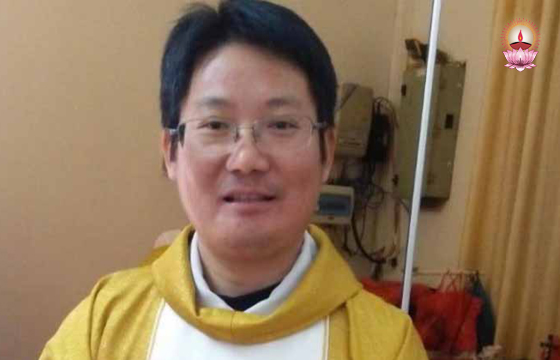
Mindong, Fr Liu Maochun kidnapped for 17 days to force him to join the ‘independent Church’
Fr Liu Maochun, 46, a priest of the diocese of Mindong (Fujian), has been in the hands of the Religious Affairs Bureau for 17 days. Fr Liu is not reco-gnized as a priest because he be-longs to the underground Church and refuses to sign up for membership in the independent Church (which is subject to the Chinese Communist Party).
In the late afternoon of September 1st, Fr Liu had gone to visit some sick people in the hospital. On leaving, around 6.30 pm, a group of people, sent by the Religious Affairs Bureau, arrested him and took him to an unknown location. His where-abouts is still unknown. Family members have lobbied for news of him, but to no avail. The authorities have only confirmed that he is in the hands of the Religious Affairs Bureau.
Father of Fr Liu is 86 years old and very ill and has limited mobility; his mother, 70, is also ill: both need his help.
According to information from Mindong, several priests – at least 20 – refuse to join the “independent Church.” For this they are under constant pressure from the local government and have been deprived of the freedom to treat the faithful. These pressures have grown stronger in the run-up to a possible renewal of the Sino-Vatican agreement.
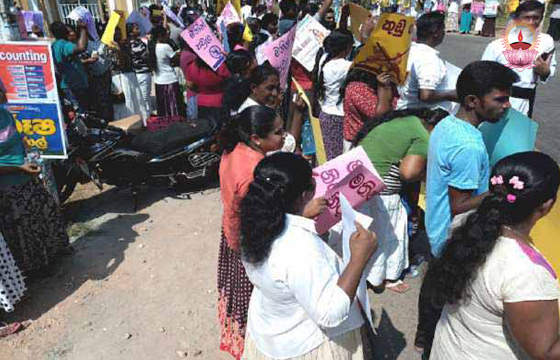
Sri Lankan religious leaders oppose cannabis cultivation
Sri Lankan religious leaders say they are saddened by the efforts of some groups to promote cannabis cultivation at a time when the government is taking strong measures to eradicate drugs from the country.
Ven. Ittapana Dhammalankara Thera, chief prelate of Kotte Sri Kalayani Samagri Dharma Maha Sangha of Siyam Maha Nikaya, said the government should take immediate action to stop all promotions related to cannabis.
“Regular drug raids should be further strengthened and act-ion should be taken to eradicate narcotics from the country. At the same time, the government should make every effort to strictly enforce laws and eradicate drugs including cannabis from the country,” he said.
Experts claim that the country can generate high revenue from the cultivation of cannabis. Recent research has shown that if drugs based on cannabis are manufactured and exported, it will be possible to earn more foreign exchange than is earned from all exports.
Sri Lanka has become a major transit point for traffickers as well as suffering from widespread drug addiction. Cannabis and heroin have become the top two narcotic scourges in the country. Concerns are growing about drug abuse among young people including children.
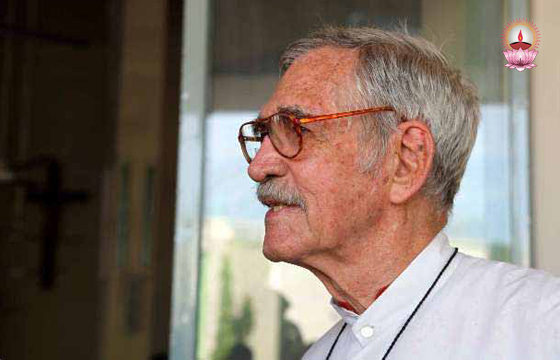
An unforgettable missionary who transformed Bangladesh
American Holy Cross missionary priest Richard William Timm (1923-2020) was a giant among men with a big heart burning with selfless love for humanity.
More than six decades of service in Bangladesh (1952-2016) speak volumes for him, and his death on Sept. 11 in the US brought to an end a golden era of extraordinary missionary life and works that touched the lives of millions of Bangladeshis.
He will be remembered as a pioneering missionary in a land where a small but strong Christi-an community has thrived thanks to great Western missionaries like him over the past five centuries.
Bangladesh can never forget this great icon as he was “an American by blood but a Bangladeshi by spirit.” He is an inseparable part of the history of Bangladesh and his demise saddened many people of other faiths thanks to great memories of his companionship and contributions.
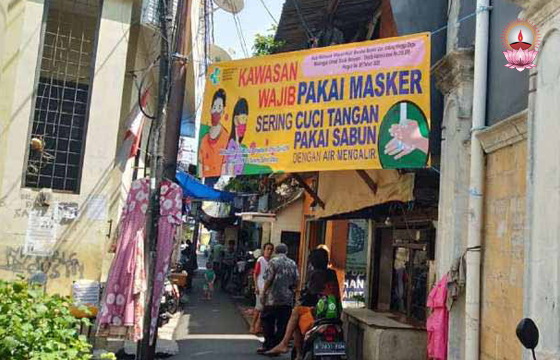
Covid-19 infects 30 Indonesian seminarians
At least 30 seminarians at a minor seminary in Indonesia’s West Kalimantan province have been infected with the coronavirus. Some are currently being treated at a local hospital, while others are self-quarantining.
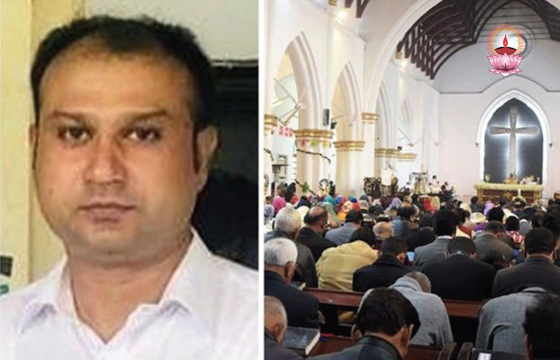
Fear keeps Pak judges from acquitting innocent Christians
Judges in smaller courts in Pakistan are too afraid to let Christians go free in blasphemy cases because of the threat from extremists, a human rights activist says.
The country prosecutes anyone who is seen to be insulting Islam – with the death sentence often handed out.
In light of another Christian falling foul of the laws, Sajid Christopher Paul, President and Executive Director of Human Friends Organisation, has said more needs to be done to make judges feel secure.
“Judges in the low courts do not feel as secure as the judges in the higher courts. The judges in the low courts do not have as much security as the High Court and the Supreme Court,” Paul told religious freedom charity Aid to the Church in Need.
“I am not saying the judges themselves say they are insecure but the lawyers and everyone involved in cases such as this say that they don’t have the same security so they don’t make the bold decisions.
“The Supreme Court can make daring decisions like the acquittal of Asia Bibi because they have high-level security.”