Catholics in fear as Chinese authorities ban religious education

Communist authorities in mainland China are exerting a clampdown on Christian activities in the country, spreading fear among some church members about their long-term futures.

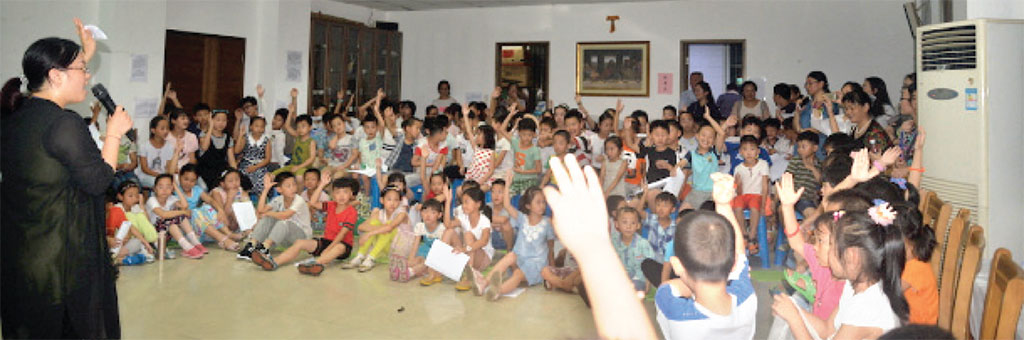
Dioceses in China have been receiving constant warnings about a prohibition on summer camps and many local churches have been pressured into giving up all related activities. Some church members worry about the impact this will have on church development.

Some dioceses or parishes have routinely organized camps for students every summer vacation, aiming at cultivating their faith. In recent years, however, the authorities have addressed the issue of religious belief among young people, not only banning minors from entering churches but also forbidding churches from even staging summer camps. Two dioceses had organized summer camps in northern China this year but only one was successfully held, while the other had to be cancelled. A member of this diocese, who we can only name as John, told ucanews.com that the first camp was successfully held because church staff invited church members privately. When the diocese openly promoted the second one, however, the government banned it. John said there was no problem if parishes organized camps privately and only publicized them after the event. “It’s alright if the camp is held privately but once it goes public, it isn’t allowed. It must take place in secret,” he said. Another church member told ucanews.com that a diocese also in China’s north planned to organize a summer class at a big parish, but they moved it to a small parish in a rural village for fear of the authorities finding out about it.

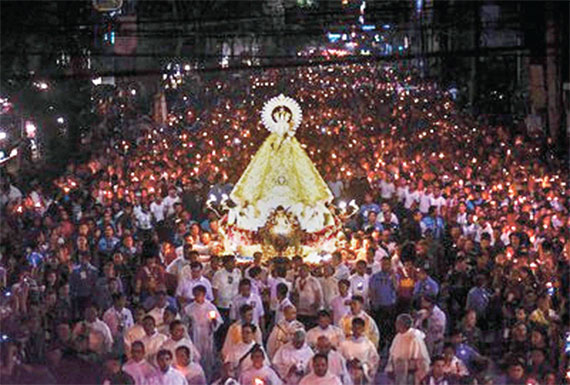
Duterte declares Virgin Mary’s nativity feast a holiday

Philippine President Rodrigo Duterte has signed a law declaring September 8 of every year, the Feast of the Nativity of the Blessed Virgin Mary in the Catholic Church, a “national special working holiday.”

The Nativity of the Blessed Virgin Mary is one of the oldest Marian solemnities and one of the principal feasts of the liturgical devotion to the Blessed Mother.

A working holiday means that there will be classes in schools, while offices and other establishments will be open.

It is the second Marian feast to be declared a holiday in the Philippines. In 2017, Duterte declared December 8 a special non-working holiday to mark the Feast of the Immaculate Conception. He paid homage to Mary and described her as “selfless” when she accepted the invitation to be Jesus Christ’s mother “so that the plan of salvation be realized.”

The president, who has been a vocal critic of Catholic leaders, called Mary “the epitome of faith and source of inspiration” for many Christians, especially during challenging times.

India declines to speak at UNSC session on minorities

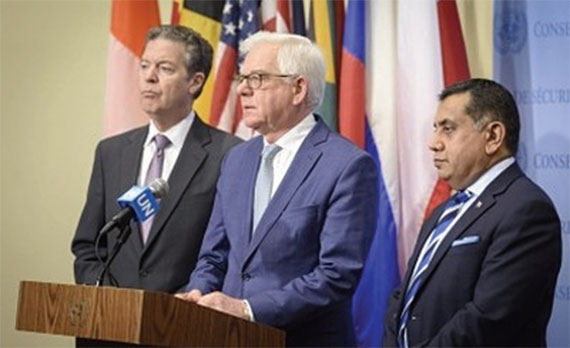
India declined to speak at an informal session of the UN Security Council on safety of minorities in conflict when it was invited to take its turn on Aug. 29th. India was listed as a speaker at the informal consultation, but when Poland’s Foreign Minister Jacek Czaputowicz, who was chairing the session, asked India to speak, the member of the Indian Mission who was present passed up the invitation.

According to the roster of speakers, India was to have followed Pakistan. The Pakistani delegate defended his treatment of minorities that had been criticised by Samuel Brownback, the US Ambassador at Large for International Religious Freedom, Tariq Ahmad, a British Minister of State who is Prime Minister Boris Johnson’s Special Envoy for Freedom of Religion, and Canada’s Permanent Representative Marc Andre Blanchard, as well as a Naveed Walter, the President of Human Rights Focus Pakistan, an NGO.

Unlike China and Russia, which in their responses hit back harshly against their Western critics, Pakistan’s rebuttal was mild given that the criticism came from the US and Britain.

Cardinal Bo: Myanmar is ‘a bleeding nation,’ people must seek justice

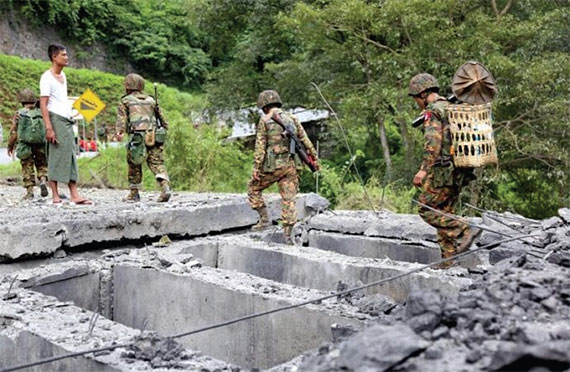
Cardinal Charles Maung Bo of Yangon said the hopes that came with democracy have not been realized and, instead, the country is wounded and bleeding.

In a 7,000-plus word statement, released on the feast of the Assumption, on August 15, the cardinal expressed deep concerns about the challenges faced by Myanmar’s people, reported ucanews.com.

“Seven years ago, we saw what we thought was the beginning of a new dawn,” Bo said.

“As political prisoners were released, cease-fires were signed, space for civil society and the media relaxed, and a dialogue between political leaders led to the first credible elections in a quarter of a century and the election of a democratic, civilian-led government in 2015,” the cardinal said.

“But in recent years, very dark clouds have appeared again, overshadowing the flickers of light that had begun to emerge. Continuing conflict, continuing abuses, and the spread of religious and racial hatred threaten the hopes, freedoms, and dignity of people throughout the country.” “Myanmar is a wounded nation, a bleeding nation. It still suffers from old wounds, yet new wounds have been inflicted upon us,” the cardinal said.

First bishop ordained since Sino-Vatican deal

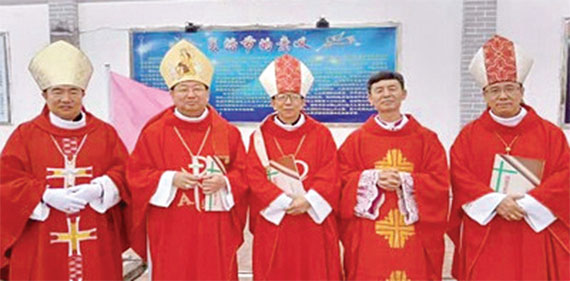
The first ordination of a bishop since the 2018 China-Vatican provisional agreement has taken place in Jining Diocese, Inner Mongolia. Fr Anthony Yao Shun, 54, of Jining Diocese was ordained at the Our Lady of Rosary Cathedral in the city of Jining on Aug. 26.

The ceremony was held by Bishop Paul Meng Qinglu of Hohhot, a vice-chairman of the Chinese Catholic Patriotic Association (CCPA), and concelebrated with Bishop Matthias Du Jiang of Bameng in the same region, Bishop Paul Meng Ningyou of Taiyuan in Shanxi province and Bishop Joseph Li Jing of Ningxia in Ningxia Hui Autonomous Region.

An approval letter by the Bishops’ Conference of the Catholic Church in China (BCCCC) was read out during the ceremony, declaring that Bishop Yao had been elected “according to the tradition of bishop election by the Holy Church and the regulation of the BCCCC.”

“After verification   and a valid election, we give an official approval now. This candidate was approved by the Pope,” it continued.

According to the local source, the ceremony was overseen by minimum government security and ran smoothly. More than 120 priests concelebrated with 50 nuns together and more than 1,000 Catholic attended the Mass.

A diocesan priest, who identifies himself as Joseph, noted that their diocese had focused on evangelization and connection with local Catholics.

“God uses bishops as a visible sign to lead us and manage the Church. I think Bishop Yao has plans for how to develop the diocese development,” Father Joseph told ucanews.com.

End to long-running church row in sight, Indonesian mayor says

A dispute which has seen a Protestant church in Indonesia sealed off for the past nine years will be resolved by the end of the year, according to the local mayor where it is located. The mayor of Bogor in West Java province has assured members of the Yasmin Indonesian Christian Church that a final resolution to the dispute is close at hand. The dispute centres around a building permit that was cancelled in 2011 in defiance of Supreme Court and Ombudsman rulings that said the church was legal. Revocation of the permit came after the mayor at the time bowed to pressure in 2010 from hard-line Muslims who wanted the church torn down, church members say.